10 Tips for Writing Dialogue (Guest Post)

As some of you may have heard through Twitter or Facebook, I gave birth to a beautiful baby girl over a week ago. Needless to say it has been a busy and exhausting time and my blog has been rather quiet. I had a post planned just after Valentine’s Day, but didn’t quite get to finish writing it before going into labour, so it has been put on hold for now. In the meantime, I was lucky enough to have freelance blogger and writer Heather Smith offer to write a guest post for me. Here are her top 10 tips for writing dialogue.

10 Tips for Writing Dialogue

1. Start – Getting underway is the toughest part. You have to compose dialogue over and over again to get good at it. You have to practice. The more you write, the better it gets.

2. Eavesdrop – Listen to actual people talking. They don’t use proper grammar. They don’t speak in full sentences. Sometimes they chat over each other. Write dialogue like it actually sounds. Dialogue is rich in its own way- the silences, the crosstalk, the things omitted are just as vital as what’s actually said. 

3. Speak it – Read what you wrote audibly. You’ll hear where it sounds stale or stilted. You’ll hear where it doesn’t flow and where it does flow. If you read quickly enough, your brain will unavoidably correct what you’ve done wrong, so listen to your words as you read aloud. You’ll acquire a lot from this simple exercise. 

4. Chill out– Don’t stress about making your dialogue flawless. Let your characters speak. They may say things that you never imagined. If you know your characters inside and out, let them express themselves through you. You’ll wind up with a much more realistic story. 

5. Wander – Feel free to ramble on. People infrequently get right to the point in a discussion. Unless your character is a police officer or doctor giving a report, don’t presume that they’ll give just the facts. People go off-topic; it’s a part of life. Let your character ramble and they’ll end up much profounder and genuine. 

6. Keep it unpretentious – Don’t make your characters say everything they know. No one does that. Reduce your dialogue to the bare bones. A ‘yep’ or ‘nope’ can speak volumes about a character. They don’t always have to reply to others, and they don’t constantly have to finish a thought. Let your readers fill in some gaps. Letting the readers fill in the blanks adds strata to your story that even you, the writer, might have otherwise overlooked. 

7. Slang – What we speak is a living language. It changes. Let your characters’ verbiage show who they are and where they come from. If they want to say ain’t, then let them. It’s not your job to be the grammar police for your characters.  People speak badly. They dangle participles, they use fragments, and they curse. Remember that it’s not you that’s talking- it is your character. They have their own personalities, so let them be who they are.

8. Less is More– Don’t go too far with accents. Tell the reader what pronunciation a character has and then give clues in the dialogue. No one wants to read a page of apostrophes and deliberately misspelled words. A ya’ll or a gotta once in a while will prompt readers of who’s talking, without the annoyance factor.

9. Intelligibility – Make sure your readers can follow who is talking. A he said, she said will do wonders for a dialogue-heavy piece. If you have more than four quotes without stating who is talking, you might want to toss that in. It doesn’t have to be difficult. ‘He yelled’ works just as well as ‘he shrieked, crying to the skies as his thundering call resonated off the walls’. 

10. Exhibit it– Remember that people are reading your dialogue, not speaking it (unless you’re a screenwriter). If you want a character to pause, take a breath, or even stutter, you’ll have to write it down. Breaking up a quote is a simple way to visuallydisplay a pause. ‘It’s like this,’ he said, ‘I’m leaving.’ Because of that disruption, the reader sees the pause without being told it’s there. Unless you have a character doing something unique with the time between words, make it visual but not explicit. 

Heather Smith is an ex-nanny. Passionate about thought leadership and writing, Heather regularly contributes to various career, social media, public relations, branding, and parenting blogs/websites. She also provides value to nanny service by giving advice on site design as well as the features and functionality to provide more and more value to nannies and families across the U.S. and Canada. She can be available at H.smith7295 [at] gmail.com.

Top 5 Reasons Why I Write

1. If I didn’t write my head would probably explode. My head is always so full of ideas I just need to get them down on paper.

2. It is a great emotional release. I don’t know how I would have got through my tough teenage years if I hadn’t been able to release my feelings onto the page (in poetry, in my journal, as imaginary characters).

3. I love to read. I am constantly inspired by the wonderful writing of my favourite authors. I remember as a seven year old being inspired to write stories based on my favourite Enid Blyton books and favourite fairy tales.

4. I have a wild imagination. I have vivid dreams that stay with me when I wake. I’m constantly thinking ‘what if?’ or making up stories for people walking by or imagining stories taking place in the landscape around me. No matter where I go there are always stories unfolding in my mind.

5. Characters ‘speak’ to me. Their voices speak their stories and I can’t ignore them.

Why do you write?

Helpful Writing Sites and Blog Posts January 2011

Time for the first ‘Helpful Writing Sites and Blog Posts’ post of the the year. I’ve collected a lot of great picture book links through the 12 x 12 challenge Facebook group, but I also have a few links in other areas of writing, too.

Writing (General)

Some Advice to New or Aspiring Authors

Some great advice and tips for writers new to the writing/publishing journey.

How to Make a Boring Character Interesting

This post outlines the various reasons your character could be coming across as boring or flat and offers some solutions to make your character more interesting.

Five Tips for Revising Your Novel

Literary Agent Courtney Miller-Callihan gives five tips that look at your novel as a whole when doing revisions, including a tip on character names and another on dialogue tags.

What Will Make an Agent ‘Gong’ Your Query

Thirteen reasons why an agent will stop reading your query–things to avoid when writing query letters.

Grandma Mary Can’t Market Your Book

Whether you intend to self publish or go the traditional publishing route, authors need to consider marketing. This post gives 7 steps to building a marketing plan and reaching out to your readership. It even includes a nifty chart you can use.

When to Quit Querying and Self-Publish

This post does a great job of presenting the various aspects you need to consider if you’re thinking about self-publishing after having little success with querying. It takes a very honest look at the possible reasons your work may be getting rejected and whether self-publishing is a viable alternative and also gives the honest facts about what it takes to self-publish. I love how honest, balanced and unbiased this post is in regards to self-publishing vs. traditional publishing.

Writing for Children

9 Factors That Make a Picture Book Successful

If you are a picture book writer this is a post well worth reading. These are nine important elements to writing an effective picture book.

The 6 Most Common Mistakes Made by Aspiring Children’s Book Authors

6 common mistakes this editor sees made by picture book authors and some advice on how to avoid them.

For All Picture Book Writers, Read This

Links to a four-part interview with Vice President and Editorial Director of HarperCollins Children’s Books and a three-part interview with Golden Books/Random House Editorial Director. Lots of great little nuggets of advice for picture book writers in both interviews.

Picture Book Tips from Successful Agents

Children’s book author and editor Tamson Weston consulted with agents on what makes a picture book successful and shared the top five tips for making your submission stand out.

Writing Easy Readers – Or How To Get 2nd Graders to Love You

5 quick tips for appealing to early readers as shared by an author of children’s chapter books.

Can’t Wait to Meet You

With less than two weeks until I’m due to give birth and less than two weeks until my eldest child starts school, my mind has been thinking of little else than getting organised for both these momentous events. It is little wonder I have been unable to think of something to blog about this week!

Thanks to the wonderful support and suggestions of the 12 x 12 challenge Facebook group, I’ve decided to allow myself a little creative time today to write a poem to share. As a teenager I used to write poetry all the time to get out my feelings onto paper; sadly, it’s something I don’t really do anymore. I’ve written this poem as a set of haikus.


Can’t Wait to Meet You

Every time I hear

Your heartbeat I’m filled with joy

Can’t wait to meet you.


Knowing you’re growing

Preparing to greet the world

Can’t wait to meet you.


God has plans for you

You were always meant to be

Can’t wait to meet you.


Next week (providing I’m not in hospital with a new arrival) I will post my monthly helpful writing posts round-up and after that I have a few guest posts lined up to help me through those early weeks with a newborn, but if my blog is a bit quieter over the next few months, you’ll know why. For now, I’m off to contact school books and label uniforms.

The Publisher Checklist

One of my resolutions/goals this year is to submit more. I was fully prepared to submit some of my stories last year and had everything ready to go. I had several polished stories and a checklist of publishers for each. Hesitation and procrastination held me back. I should have been sending more out as soon as I got replies back, but I hummed and hawed over whether the stories were really good enough and whether they needed more work before sending on to the next. I had a good year in 2011, though. My success rate for submissions in terms of short stories/competitions was nearly 50%. I should have submitted more! I also got positive feedback from publishers on some of my children’s stories, which should have encouraged me. So this year I’m resolved to submit more–especially in terms of my children’s stories.

The Publisher Checklist

When submitting, it’s vital to keep track of what is being sent to whom. That’s why I keep a publisher checklist as a spreadsheet in Excel. I want to share that with you, in case anyone else finds it helpful. Of course, it can be applied just as readily to agents if you happen to be submitting to agents.

– Name of publisher (or agency). Those highlighted in red are those who are currently closed to submissions. It’s a good idea to check back every now and then, though, as sometimes they reopen for short periods of time. Those highlighted in yellow are those to whom I have submitted and am waiting to hear back from (I haven’t started submitting this particular story yet). Those highlighted in blue are the ones I have heard back from.

– Contact name. Most publishers request for you to address the submission ‘to the editor’ or something along those lines, but for those who have a specific contact name I add them to the list. This is especially important if you are submitting to agents, as agents would prefer you address them by name rather than ‘dear agent’.

– Contact details. This is where I list their postal address and/or e-mail (depending on how they prefer you to submit). I also list their phone number.

– Query done? A simple yes or no here. As you can see, I’ve only written our a query/cover letter for Scholastic for this story at the time of this post. I usually write a generic query/cover letter for each story that’s ready to submit, then I copy it into a new Word document and tailor it to suit each individual publisher, keeping their individual guidelines in mind.

– E-mail/Post? Some publishers prefer submission by post, others by e-mail. It’s important to note this down as it will determine how you format your query/cover letter. (For example: a postal letter requires contact details at the top of the letter, whereas an e-mail requires them at the bottom.)

– Simultaneous submission? Here I note if a publisher specifically states they are not open to simultaneous submission (they will not accept submissions that have also been subbed elsewhere–it has to be exclusive). I also mark the box red so I don’t accidentally send to them when I’ve subbed to other publishers.

– Reread submission guidelines? Here I paste a link directly to the submission guidelines. I won’t send out my query/cover letter until I’ve marked this box with a green YES.

– Stamped self-addressed envelope? For those who require postal submission, a SSAE is required if you wish to receive a reply and your manuscript back (in the case of a rejection). This gets a tick when done.

– Sent? Once the submission had been sent this box gets a tick (plus the publisher gets highlighted in yellow).

– Date sent. So I can keep track of how long it’s been out on submission.

Expected wait time. This is how long they estimate it will take for you to receive a reply. Once I’ve sent the submission, I make note of what date I should expect to hear back from them.

– Reply received? Once I receive a reply, I note the date and whether it was a rejection or not. For a rejection I highlight this box red. For requested edits it gets highlighted yellow. And if it gets accepted: green.

– I then have subheadings for stages of edits if they have been requested (eg: edits requested, date edits sent).

It’s important to regularly recheck details and update the list. Addresses and contacts can change. Some publishers are only open at certain times or close down submissions if they don’t have room for anything new.

How do you keep track of your submissions? Do you keep some kind of checklist?


Queensland Floods – One Year On

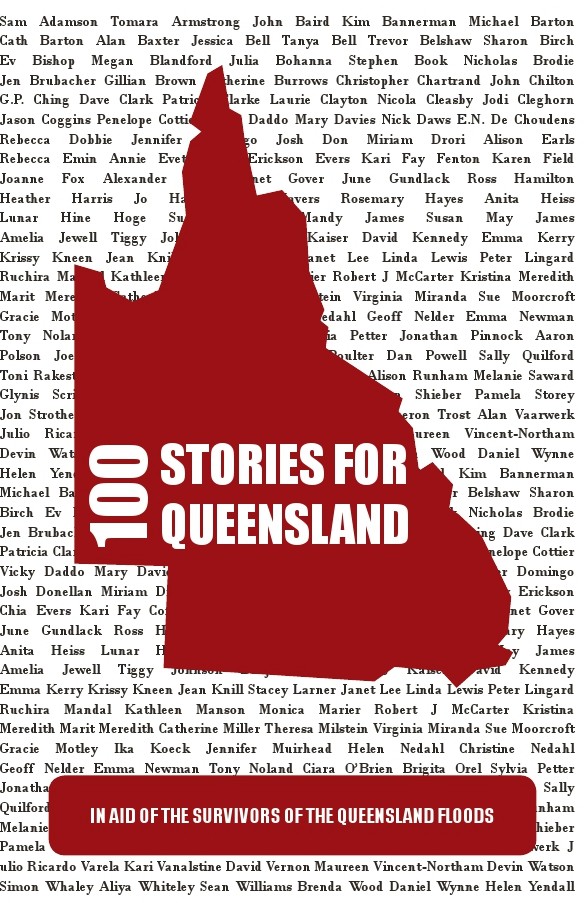
Today marks the one year anniversary of the floods that devastated Queensland in Australia. One year on and the state of Queensland is still trying to rebuild–some people still aren’t back in their homes. I just wanted to post to remind everyone that it is still possible to purchase copies of the charity anthology 100 Stories for Queensland. All proceeds go to help victims of the Queensland floods. Below are some links to places where the anthology can be purchased (either in paperback or ebook form). Not only will you be helping out, but you’ll get to read some fabulous stories by some talented authors. There’s something in there to suit everyone.

100 Stories for Queensland site

Amazon UK (free delivery to Australia and NZ on orders £25 and over)

Amazon US

Book Depository (free delivery worldwide)

Writing Picture Books – 4 Ways to Get Inspired

As I mentioned in my last post, this year I’m taking part in the 12 x 12 in 2012 picture book writing challenge. Some of the participants are using ideas they came up with during PiBoIdMo in November, which gives them a great starting point. I didn’t do PiBoIdMo since I was busy entrenched in NaNoWriMo at the time. This means I’m going into 12 x 12 without a stockpile of ideas to pick and choose from. I was lucky enough this past week to have been inspired by a particularly hot day (actually it was about three hot days in a row). Sometimes inspiration can just strike like that, other times it doesn’t. I’ve still got eleven months of ideas to find (not to mention an extra six during NaPiBoWriWee if I do that too).

So how does one go about finding picture book inspiration?

These are some of my favourite ways to get inspired:

– Observing children at play. I’m lucky enough to have two little muses running around my house and they provide fantastic inspiration. It’s hard not to find story ideas when watching children play as they have such vivid imaginations themselves. You find yourself immersed in their world and you’re brought down to their level. If you don’t have children of your own and you’re not a teacher or childcare worker, seek out places where you can watch children play: a local park; the McDonald’s playground; friends/family with children. Don’t forget to take a notepad!

– Sitting outside. I’ve always found sitting outside and just absorbing the world around me to be a great way to get inspired. Take a notepad or laptop and find a nice spot in the garden/at the park/at the beach/by the river to sit and let your senses take over. What can you see, hear, smell, taste and feel? Try to see the world from a child’s point-of-view. Is that a fairy hiding in the roses? Is that a pirate ship out at sea? It doesn’t all have to be fantasy, of course. A game of soccer could be the starting point for a story about being left out/trying your best/trying something new. If the weather is bad, try sitting and staring out the window.

– Draw on your world (aka Write what you know). I live on a farm and I draw on those farm experiences to find inspiration. A mouse in the hayshed? What if he was trying to find a new home for his family? Think about where you live and how you can draw on it. Perhaps you live in the city or by the beach or in a small neighbourhood; what unique experiences can you use in a story? Look at your world from a child’s perspective; what would they see? What about an animal?

– Go places. Go to the zoo and watch the lions/meercats/penguins. Go to the museum and imagine stories behind the exhibits (Who flew that plane and where did they fly it? Was that dinosaur shy or boisterous?) Go to the beach and observe the people/families/animals. What are their stories?

As you become inspired, just keep one important point in mind: Picture books are written for children, so when crafting your character (whether human, animal, monster or alien) make sure your character has a child’s perspective. Children should be able to relate to the character and the character’s situation.

How do you get inspired? I’d love to hear where you find inspiration when writing picture books.

Picture: omar franc via stock.xchng

12 x 12 in 2012

Over on Julie Hedlund’s blog she has set a challenge: write 12 picture book drafts in 12 months–a picture book a month for every month of 2012. I thought this sounded like a great challenge as I love writing picture books and am often inspired with picture book ideas, so I joined up.

Julie has done a fabulous job of organising this challenge. There are monthly prizes for participants, guest posts from those in the picture book industry (the first guest post from picture book author and founder of Picture Book Idea Month, Tara Lazaar, went up yesterday) and a great community of fellow participants in the Facebook group Julie has set up for the challenge. You can also follow the #12x12in2012 hashtag on Twitter. (Edited to update: the new Twitter hashtag is #12x)

For anyone who is interested in writing picture books this challenge is a great opportunity to learn, grow and connect, so I would encourage you to join up. You can join at any time throughout the year, but to be eligible for prizes you need to have signed up by the 29th January 2012 (you still have nearly a month to sign up). You can find details on signing up here (it’s super easy and completely free).

With a baby due in a month, I hope I can stick to the challenge. Like Julie, I also intend to do NaPiBoWriWee (National Picture Book Writing Week) again this year. Am I up to the challenge? I guess we shall see.

Helpful Writing Sites and Blog Posts November and December 2011

I missed posting last month’s helpful writing links post in the craziness of NaNoWriMo, so this month you get the best writing sites and blog posts I’ve come across in the last two months.

Writing

Write Like Jane Austen

I was going to put this website under ‘Just for Fun’, but it is actually quite a helpful writing tool for anyone writing historical/period pieces. Just type in a modern word and it will tell you the equivalent word Jane Austen would have used.

Need a Jump? Four Ways to Fix a Stalled Story

This isn’t about writer’s block. This is for when you know where you want your story to go and you have your plan, but the story just won’t write. The scene you’re writing feels boring and lifeless. Something just isn’t working. This post can help you pinpoint why your story has stalled and how to fix it so you can get momentum going again.

Writing Fantasy Genre Stereotypes Part One: Your Heroine is Too Beautiful and Part Two: Writing the Opposite Gender

This two-part series looks at gender stereotypes in fantasy writing and how to avoid them. In particular, it looks at how in fantasy female characters are often stereotyped as either a sex object or a man in women’s clothing (or often both combined). Part one deals with visual stereotyping in the fantasy genre and part two deals with women who act like men and men who act like women (particularly aimed at women writing male characters or men writing female characters).

10 Ways to Create a Plot Twist

Plot twists are a great way to keep your story exciting, but it’s all about finding the right moment and right scenario to introduce the twist. This post provides ten ways for adding a plot twist into your story.

25 Reasons Readers Will Quit Reading Your Story

As writers we want our readers to keep reading until they turn the very last page. If we don’t want readers to close our book half way through, or, even worse, after the first page, this list provides tips on what to avoid in your novel to ensure your readers will keep turning pages. A great checklist for revision.

Revising

Polishing Till it Shines

A great checklist of things to look out for when revising to make your manuscript as good as it can possibly be before submitting.

Self Publishing

11 Self Publishing Strategies for Success

A lot of authors now look to self publishing as an alternative to traditional publishing, but it is by no means an easy road. This post offers some strategies to help ensure your self publishing journey is a success.

So You’re Thinking About Self Publishing

A round up of helpful sites for those thinking about self publishing.

Social Media

8 Incredibly Simple Ways to Get More People to Read Your Content

Not getting many reads on your blog? This post offers some simple solutions to help get your blog posts noticed (and shared).

How to Write a Popular Writing Blog

Tips for what makes a blog popular (a post for writers who blog).

I hope you all have a happy and safe New Year!

A Farmer’s Night Before Christmas

I got inspired to write this a couple of weeks ago and thought it would make a nice Christmas present for all my blog readers. By coincidence, this morning I came across a post on Susanna Hill’s blog with a holiday contest to write your own version of ‘Twas the Night Before Christmas. So if you’re inspired to write your own version (or already have), why not enter Susanna’s contest. Or you could just pop over there and read some of the other fantastic versions of the classic Christmas tale people have come up with.

Here is the version I wrote a few weeks back, inspired by life on the farm in Australia.

farmernightbeforechristmas sig

A Farmer’s Night Before Christmas

‘Twas the night before Christmas and out on the farm,

Not a creature was stirring in stable or barn.

The hats were all hung after a long day of sowing,

And just like the song, the cattle were lowing.


The chickens were nestled in roost boxes of straw,

The dog was snoozing by farmer’s front door.

Both farmer and wife sat out in the yard,

Relaxing with cans after working so hard.


When out in the paddock there was stomping of hooves,

“Sounds like the cattle are on the move.”

With one final swig, farmer rose from his chair,

Wondering what gave his heifers a scare.


The pink and gold sky gave just enough light,

For the farmer to see a very strange sight.

An eight-cattle drove pulling a ute,

With a roaring V8 and a tray full of loot.


The driver’s tanned arm propped up on the door,

It had to be Santa, the farmer was sure.

Kicking up dust his Friesian steers came,

And he whistled and shouted and called them by name,


“On Sausage, on T-Bone, on Rissole, on Stew,

On Schnitzel, on Beefy, on Rump Roast, on Moo.

To the top of the hayshed; to the top of the dairy,

Get moving you bullies, stop acting like fairies.”


Then with a bang they crashed on the roof,

The tin rumbled like thunder under each solid hoof.

In through the screen door the farmer did race,

As Santa squeezed out of the old fireplace.


He was dressed in a singlet and blue stubby shorts,

His blundstones were covered in dirt of all sorts.

His skin was all wrinkled and brown as the earth,

He had a belly of considerable girth.


The beard on his chin was white as a lamb,

And the smile on his face as wide as a dam.

He gave farmer a wink and a thumb in the air,

Then offloaded the pressies and got out of there.


He jumped back in his ute and spurred on his team,

The engine grunted and purred like a dream.

He was heard to yell out as he drove out the gate,

“Have a ripper Chrissie and bonza new year, mate.”


To all my blog readers: I hope you have a happy and safe holidays!

A writing blog