Write on Con is Nearly Here

I’m so excited for Write on Con this year. I attended last year and got so much out of it. This year it will be commencing on August 16th.

What is Write on Con?

Write on Con is an online conference for writers of kidlit (from picture books through to young adult). It’s for writers all over the world and best of all it’s FREE!

What Happens at Write on Con?

– Live chats and blogging events with professionals in the industry, such as agents.

– Query critique sessions.

– Posts from industry professionals and authors on a variety of topics, from querying to characters and everything in between.

– Workshops.

– Peer critiques (queries/first 250 words/first 5 pages) in the forum.

– Contests.

– Writing discussions (in the forum).

Why I Love Write on Con

It’s FREE. As someone living on a tight budget, I feel guilty spending money on conferences when we’re paying off our house and we need a new freezer, so Write on Con is a God send for me.

It’s online. I live rurally – about a three hour drive to the nearest big city where all the conferences take place. Not only can I not afford to travel to and stay overnight in the city to attend, I also have two small children at home. At Write on Con I get to attend from my own home – no travel required. (I can even wear my pyjamas if I want!)

Meeting fellow writers. Last year I met some really lovely writers whom I still talk to now. I even started up a critique group with a few of them following the conference, which is still going strong.

Learning lots about the craft and the publishing industry. Last year I came away with so much fabulous information from the live blogs, chats and posts by the industry professionals and authors that I’ve been able to put into practice with my writing. And even if you can’t attend one of the live events (due to timezone or other commitments) you can still access it afterwards.

I highly recommend Write on Con for anyone who writes children’s literature.

You can check out Write on Con here: http://writeoncon.com

And register for the forums here (you can even introduce yourself already):  http://writeoncon.com/forum/forum.php

Helpful Writing Sites and Blog Posts July 2011

It’s been a quiet month here on the blog (due to my family being hit by some nasty illnesses), but I have still been collecting helpful writing sites and blog posts during July to share with you.

Writing

7 Things I’ve Learned So Far

A guest post by author Sydney Salter on seven things she’s learned on her writing journey so far. She has some great advice on rejection and criticism of your work.

How to Write with Kids at Home

As a mum with two young children at home I know how difficult it can be to find five minutes quiet time to get some writing done. This writer/mum offers some tips on keeping the kids occupied so you can write.

4 Writing Crutches That Insult a Reader’s Intelligence

Some great reminders for writers on writing crutches and how to avoid them. (Are you guilty of using too many adverbs or telling instead of showing?)

What Makes for a Great Thriller

Some tips from two thriller authors on the essential elements of a thriller.

Pitching/Queries

Why Pitches Fail

Three reasons why pitches fail.

Self-Publishing

Three Reasons to Self-Publish (and a big one not to!)

Advice for anyone considering self-publishing.

Social Media

What Social Media Stats Should You Include in Your Book Proposal

A look at blog stats agents and publishers deem relevant.

6 Secrets to Writing a Killer Author Bio

On our blogs, Twitter, guest posts, interviews, etc. it’s important to have an author bio. This post gives tips on writing an effective bio.

The 5 Biggest Mistakes Writers Make on their Websites

The five most common (and easily fixed) mistakes writers make on their website.

Helpful Writing Sites and Blog Posts June 2011

It’s time for my monthly round up of helpful writing sites and blog posts. All links will be added to the masterlist (link at top of blog).

Writing

Tips for Writing Picture Books

5 great tips for writers of picture books.

3 Signs You’re Writing a Condemned Novel

How to recognise problems in your manuscript and how to decide whether they are fixable or whether the novel needs to be put aside.

Have You Ever Heard the One About “Was”?

I’ll admit to being wary of using the word ‘was’ in my writing, though I’ve now come to be a little more accepting of it. Author Emma Darwin makes some good points about why ‘was’ isn’t as bad as a lot of writers are led to believe. She tells how often it isn’t the word ‘was’ that’s the problem and goes on to outline the underlying problems that are often blamed on ‘was’.

The Courage Not to Publish

While it takes courage for a writer to put his/her work out there to get published, this article talks about having the courage to realise your work may not be publishable and to hold back from publishing. It specifically targets writers who either think their writing doesn’t need fixing because they think an editor will sort it out, or those who want to self-publish after being rejected by traditional publishers.

Commonly Confused Words

You know those tricky words, like ‘lie’ and ‘lay’? This post clears up some of the confusion with commonly misused words.

The Truth About Passive Protagonists

This post outlines when it’s ok to have a passive protagonist and when it’s not.

The Single Most Powerful Writing Tool You’ll Ever See That Fits on One Page

A listing of everything you need to know about your story before you can successfully finish it. Written in the form of questions, the list covers the four parts of the story structure.

Social Media

5 Simple Ways to Make Your Blog More Visually Appealing to Readers

Tips for creating a blog with an appealing look and feel and how to avoid a poorly designed blog.

THE Facebook Cheat Sheet: 21 Sneaky Tactics to Generate a Buzz on Facebook

21 Tactics for getting people to ‘like’ your Facebook page.

The 6 P’s of YA Social Media

6 points YA writers should keep in mind to use Social Media effectively.

Just for Fun

The Seven Stages of Receiving Critique on a Manuscript

A funny (and true) evaluation of the stages a writer goes through after receiving a manuscript critique.

The Periodic Table of Storytelling

Based on the periodic table of elements, this table covers different aspects of storytelling, such as character archetypes and plot devices. A couple of my favourites: NEO (The Chosen One) and LOL (Evil laugh).

The Best Cure for Writer’s Block

I think all writers encounter writer’s block at some point, whether you are in the middle of a novel and you’re not sure how to progress to the next scene, or you don’t know what you want to happen next, or you want to write a short story, but don’t even know what to write about. There are lots of causes for writer’s block, but what is the best cure?

When I did NaNoWriMo for the first time in 2009 I discovered the best cure for writer’s block: Just write! Because during NaNoWriMo I had a goal of writing 50,000 words in one month, I didn’t have time to sit around procrastinating over a scene until the answer came to me – I wanted to reach my daily word goal. So I wrote. Sometimes what I wrote was pure drivel, but I was writing. I could always go back later and edit or cut out. By writing when I thought I was stuck I got past the writer’s block. Once I discovered this, I’ve never been bothered by writer’s block again. Here are some methods I use to write past writer’s block:

1. Write or Die. I loved this free program during my first NaNoWriMo. The idea is to set a goal and a punishment for yourself, then start writing. The punishment occurs if you stop writing for too long and could be as simple as a siren going off or as harsh as erasing what you’ve already written. Because you have to write to stop the punishment occurring, you don’t have time to stop and procrastinate. I used this many times when I got stuck on a scene on my novel. (Remember you can edit later, so don’t worry if what you write even makes sense at this point.) If you don’t want to use Write or Die, set yourself a timer, close down any other distractions on your computer and just write until the timer goes off.

2. The Writing Book by Kate Grenville. There are some great writing prompts and writing exercises in this book. I got assigned this book when I was studying writing at university, and it’s one of the few assigned books I still refer to. Stuck on your character? There’s a chapter on character. Don’t know where to begin? Try the chapter on getting started. Here’s an example of an exercise from the book:

Write for 60 seconds without stopping. Just write exactly what comes into your head, even if it’s only ‘I can’t think of anything to write this is a stupid thing to do.’

3. Plan Ahead. Particularly if you are writing a novel or a longer piece it can help to plan before you write. Obviously this is not for everyone and some people find it too restrictive, but I find it helps me have an idea of where I want my story to go. By knowing where my story is going, and what plot points I want to include, it gives me something to work towards. That way if I get stuck, I just refer to my notes, look at what my next important plot point is, and write towards that scene.

How do you get past writer’s block?

Image: Sura Nualpradid / FreeDigitalPhotos.net

Writers Beware (Part 2)

In part 1 I talked about a situation where a writer had her book published, only to realise too late that the company was not a traditional publishing company, they were just posing as one. They played on the writer’s dream of being published to make money off her. As a result she ended up with a book that was poorly edited, unavailable in bookstores and locked into a contract so she can’t publish it with anyone else. It was left to her to market the book herself, meaning it was bought by family and friends, but no one else. Even if she worked up the courage to approach a bookstore herself, they probably wouldn’t stock it because a) it’s overpriced for a book by a first time author, b) the publishing company won’t accept refunds if the book doesn’t sell and c) the book is so poorly edited, people probably won’t buy it anyway (no matter how good the story is).

How can you avoid this situation?

You have to be savvy.

Google is your friend.

This is a good idea to do for any publisher. Google the publisher, skip past all the links for the publisher’s own website and see what other people have to say. You will quickly find out if the publisher is a reputable one and whether other writers have had good or bad experiences with them.

Get involved in writers’ circles/writers’ forums/writers on Twitter.

We writers can be isolated people, but the net has made it easy to connect with fellow writers. There are writers at all stages of the writing journey, and some of them are a great wealth of information. You will soon hear the dos and don’ts of the publishing and writing world when you’re connected to others who have been there before you. Some great people to follow on Twitter (because they always have their ear to the ground and post great links): Elizabeth S Craig and Jane Friedman.

Follow Agent/Publisher blogs or follow them on Twitter.

There are some fantastic literary agent and publisher blogs around and they’re worth following. They offer a wealth of knowledge on the ins and outs of the publishing industry. For example, Nathan Bransford’s blog is packed full of great information on both writing and the publishing industry.

Read contracts carefully.

This is an important one. Know what you are signing before you sign it. This is where having a literary agent represent you can be of great benefit because they know exactly what to look for in a publishing contract and can negotiate terms with the publisher for you. Literary agents cost nothing, unlike lawyers, but you need to query them with your manuscript the same way you would with a publisher. It’s better to query agents first, before publishers, if possible. But if your manuscript has already been accepted by a publisher, you can still query agents and mention in your query letter that a publisher has already acquired it. Otherwise, you can get a lawyer/solicitor to look over the contract for you, but it will cost money and often they don’t have as much knowledge about the specifics of publishing contracts.

What can I do to get the attention of a genuine publisher?

The most important thing to do is to keep improving your craft. The second most important thing is to become knowledgeable about the industry.

Keep Writing.

The best way to improve is to keep writing. I can’t remember who said it, but it has been said that to be a good writer, you must first write one million bad words. Quite often the first novel you write won’t ever be published. It’s sad, but true. But every word is contributing to you becoming a better writer. And one day you’ll look back on that first novel and think, ‘I can’t believe how bad it was! Why did I ever think it would get published?’

Join a critique group/Get a critique partner

Remember my story in part 1 about the author not letting anyone see their work before sending it out to publishers? He/she thought it was the smart thing to do, but there is benefit in letting others see your work before you send it out – the biggest benefit being a better novel. At some stage you need to get over your fear that other writers are out to steal your ideas. The good thing about critique groups and critique partners is you have to trust each other. You won’t steal their ideas and they won’t steal yours. Once you find a critique partner you feel comfortable with, the next hurdle is to be able to take their critique. This is a hard one. You will feel hurt. You will feel indignant (what does she mean my character is flat!). But once you get over that, you may find she’s right. Once you learn to accept your novel is not perfect and there’s room for improvement, you will be on your way to having a polished novel.

Use writing resources available to you

As I mentioned, following agent/ publisher blogs and being involved with other writers on forums/Twitter are great ways to stay informed. There are a lot of great writing resources out there, and fellow writers are only too happy to share, and so are agents and publishers. There are some great writer blogs out there too. A good place to start is Barry Lyga’s blog, he has a plethora of topics for helping to improve all areas of your writing. Check out some writing books too, like Stephen King’s ‘On Writing’.

Research the industry

Did you know if you live in the US or you intend to get your book published in the US it is a good idea to first seek a literary agent? (A good literary agent won’t charge you fees, they make their money when the book sells.) In some other countries, such as Australia, literary agents are less common and a lot of publishers are still happy to accept unsolicited (eg: unagented) submissions. Do you know which agent/publisher is most suitable for your book? You don’t want to waste time sending a fantasy novel to someone who only takes on non-fiction work. Do you know if the publisher/agent you are querying has a good reputation? ALWAYS DO YOUR RESEARCH.

Follow guidelines

Publishers and agents have guidelines for a reason, so follow them. Some publishers/agents will reject your work without even reading it if you haven’t followed guidelines.

And because someone asked…

In my comments on part 1, someone asked about how to know if a literary agent is genuine. The points I’ve made about publishing companies can equally be applied to agents. Use google, research before you query, follow writers/agents on Twitter, join writing forums (many have sections on agents/the publishing industry). And if an agent wants you to pay fees to represent you, then he/she is probably not a genuine literary agent.


Writers Beware (Part 1)

Imagine this scenario…

You’ve been dreaming of being a published author your whole life, or maybe it’s a recent dream. You get a brilliant idea for a novel. Chapter by chapter you write it down until you pen the last word. You feel great! You just finished writing your first novel. You read over it a few times, fix up the plot holes and double-check the spelling until you’re completely happy with it (you can hardly wait to start writing the sequel). So far you have shown your work to no one (because you don’t want anyone to plagiarise your brilliant idea – it’s the smart thing to do).

Then comes the scary part. You finally work up the courage to send your baby out to a few publishers and cross your fingers they will like it. You hope your story will be accepted and all your blood, sweat and tears will be validated. (Sound familiar so far?)

A letter comes in the mail, sooner than you expected. You hold your breath. What if it’s a rejection? You slowly tear open the envelope. Your story has been accepted! It’s going to be published! You can hardly believe it, all your dreams are coming true.

You sign the contract, barely skimming it (you can barely understand all the legal mumbo jumbo, but you can’t afford a lawyer to look over it. Publishers are all reputable companies, so it should be fairly standard you think). You share the news with everyone.

Finally the day comes when you hold your book in your hand. You persuade all your friends and family to buy a copy and they do. You ask them what they think and they all tell you it’s wonderful. Then one brave friend (probably a writer type) tells you the truth:

“It’s a great premise, but I have to ask, was your editor asleep on the job?” (She probably says it more nicely than this.) She goes on to point out all the spelling and grammar mistakes your editor should have picked up on. But that’s ok, you’ve seen published books with mistakes, although maybe not quite this many.

Another friend asks, “When will it be in bookstores?” To which you can’t reply. Why isn’t your book in bookstores? Why is the publisher asking you to purchase the books for your friends and family to buy?

Too late you realise something is not right. In your excitement to get published you jumped in head first.

This is a true story…

Unfortunately this story is true for some aspiring authors, in fact just recently I heard of a writer who fell into this trap (it’s what prompted me to write this post). We can all relate to wanting to get published so badly, so much so that some writers are taken in by companies posing as traditional publishers. The truth of the matter is, there is no easy path to publication, and I know a lot of aspiring writers won’t want to hear this. Getting published is hard! Even the best of the best writers got rejected several times before selling a bestseller (ever heard of J.K. Rowling and Stephen King? They both got rejected at first.) If you send in your first ever manuscript, without ever having had anyone else look at it and you get accepted straight away, there’s a good possibility it really is too good to be true.

How do I know if my publisher is genuine?

A traditional publisher (think publishers like Penguin and Scholastic) will not charge you anything, they will pay you. They will not ask you to buy copies of your own book. They will market your book to bookstores and arrange author events. They will use a professional editor.

There are some companies out there who claim to be traditional publishers, but are really vanity publishers in disguise (a vanity publisher is a company who will publish your book, but expects you to pay certain costs or buy copies of the book yourself so you can sell them). These companies take advantage of aspiring authors by acting like a traditional publisher, so the writer thinks all her dreams are coming true, only to reveal their true selves when it is too late and the contract has already been signed. You can spot these companies by comparing them to a traditional publisher. If they charge you anything, including buying your own books, they are not a traditional publisher. If they do not do any marketing/if they are not placing your book in bookstores, they are not a traditional publisher. If they speed through the editing process to get the book published super-quick, they are not a traditional publisher.

There is nothing wrong with using a vanity publisher, if that is what you want (it’s a choice you make, the same way if you decide to self-publish). Some vanity publishers are quite reputable. But be aware of what you are signing up for (including rights). Also be aware that vanity publishing has a stigma attached to it in the writing world. If in future you do query an agent or publisher, you may not want to mention you’ve previously published through a vanity publisher.

To be continued…

Part 2 – how you can avoid these companies posing as traditional publishers and how to improve your chances of landing a genuine publisher.

Were you aware companies like this existed? Have you ever been duped by one of these companies or know someone who has? Share your story below.

Introducing Jo’s Labyrinth

I’m launching a new site today aimed at children, teens, teachers and parents. It is to be a Literacy based site with a focus on reading, books and creative writing. Some of the sections include Monday Munchkins for parents/teachers of young children, Teacher Tuesday for Literacy teachers, Writer Wednesday for children and teens interested in creative writing and Friday Favourites, which will have books reviews of children’s/teen Literature (from picture books through to young adult novels) with input from my own kids.

I came to realise that while my writing blog is great for sharing my writing journey and sharing tips with fellow writers, it is not the sort of blog that appeals to my target readership. Although my short stories are aimed at an older audience, my main passion is writing picture books and children’s Literature (including young adult). I wanted to start a blog/site that appeals more to kids and teens. As a teacher/writer/mum, I’ve also had a lot of mums come to me for advice on encouraging their children to read/write, and have in the past toyed with the idea of a mummy blog. Thirdly, as a teacher who is currently not teaching I have a vast collection of teaching resources and ideas that aren’t being used and I thought it would be great to share them with my fellow teachers. On top of all that, I want to share my love of reading and writing with a new generation of readers and writers, so Jo’s Labyrinth was born.

I will still be blogging on The Graceful Doe. This is still the home for blogging about my writing journey, sharing writing tips with my fellow writers and providing links to writing resources. The Graceful Doe is my ‘grown up’ blog.

You can have a look at Jo’s Labyrinth here.

Look what I got in the mail today…

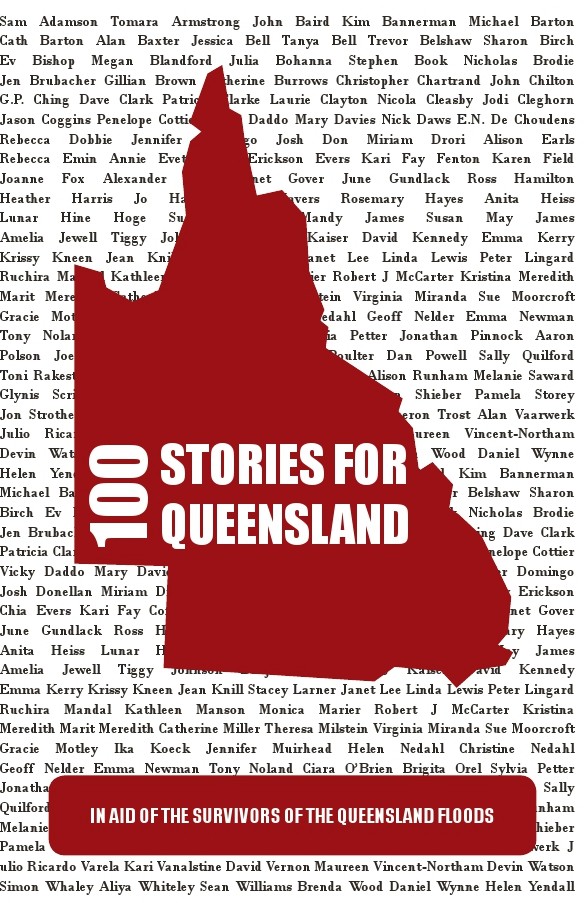
My copy of 100 Stories for Queensland arrived in the mail today. I was so excited when I picked up the package from the post office that I tore open the cardboard packaging as soon as I got into the car. As I held the book in my hand I had a grin from ear to ear. I was holding my story in my hand in published form. My husband just shook his head at me because I wouldn’t stop smiling.

My writing journey has had its ups and downs; receiving 100 Stories for Queensland in the mail today was a big up.

Helpful Writing Sites and Blog Posts May 2011

It’s time for my monthly round up of helpful writing sites and blog posts. All links will be added to the masterlist (link at top of blog).

Writing

50 Books That Will Make You a Better Writer

A list of 50 of the best writing books, from Stephen King’s On Writing to Stunk and White’s The Element of Style.

Need Some Bling for Your Title? Try PRISM

Five elements to keep in mind when brainstorming an effective title for your novel.

How to Write the Ending of Your Novel

Author Joanna Penn gives tips on writing the ending of your novel so the reader will finish the book wanting to buy your next novel.

How to Write (a Book). A Wee Rant

12 points on how to write. No, this isn’t about the technicalities of writing, or plot, it’s about sitting your butt down and actually putting words on a page. One of my favourite lines, “No wonder we all have writer’s block. We’re not even writing. Plumbers don’t have plumber’s block, do they? NO, THEY GET ON THE FLOOR AND CLEAR OUT THE WINDEX AND EVIDENCE OF MOUSE POOP UNDER THE SINK AND GET TO PLUMBING.”

The Only 12 1/2 Writing Rules You’ll Ever Need

A great motivational poster for writers with some great tips.

Ponder, Polish, Perfect: How to Successfully Revise

Literary Agent Natalie Fischer goes over some ideas to help you ‘re-envision’ your work.

Wordcount Dracula

Literary agent Jennifer Laughran (aka literaticat) has put together a very comprhensive post on word counts in kidlit (PBs through YA) including examples of published books.

Picture Book Construction: Know Your Layout

A must read post for picture book writers on picture book layout and having an awareness of page breaks.

16 Manuscript Format Guidelines

Getting ready to send of your manuscript to a publisher and all the guidelines say are, ‘Standard Manuscript Format’ and you’re not sure what that means? This helpful post outlines what standard manuscript formatting entails. A couple of the points are a little outdated, so I would also suggest scrolling down through the comments that correct them. And in particular have a look at the comment by NEB which is quite informative.

Pitching

Hook ‘Em In (in three seconds or less)

Literary agent Natalie Fischer gives some helpful hook tips.

Marketing

The Seven Book Marketing Mistakes That Authors Make

Want your book to sell? Make sure you’re not making these marketing mistakes. A couple of these are more applicable to self-published authors, but some of them are applicable to all authors.

5 Questions to Ask Yourself After Hearing: We Can’t Sell Enough to Justify Publishing It

Some tips on what to do next. I’ve put this under the heading of marketing because in most part the tips relate to making your book more marketable or building your author platform.

Blogging

Formatting Posts and Pages

Geared towards WordPress users, but helpful to other blogging platform users too, this post outlines the golden rule for formatting your blog posts to make them easier for your readers to read (hence keeping their attention).

Blog Law – Is Your Giveaway Legal?

Many writers I know do giveaways/ have competitions on their blogs. But are those giveaways/competitions legal? An attorney and blogger provides information on running blog giveaways in simple/easy to understand terms.

May is Short Story Month

What is a short story?

A story whose plot (beginning, conflict and resolution) is told in a minimal number of words. Often a short story involves some kind of twist at the end (though this isn’t necessary). A short story can be any genre.

How short is a short story?

A short story is generally a story of no more than 10,000 words. Most short story competitions will ask for stories between 1,000 to 3,000 words on average. Anthologies may ask for short stories up to 10,000 words.

Why write a short story?

1. They’re a great exercise in concise writing. A smaller word count to write a story means ensuring your writing is as tight as it can be.

2. It’s a great way to explore other genres. Because many short story competitions and anthologies ask for you to write to a certain theme, they can push you out of your writing comfort zone to try something new. You might even find you enjoy writing in a genre you never thought you would write.

3. It’s a great outlet when you need a break from/are procrastinating on your novel.

4. Some competitions and anthologies will pay you if you win/your story is accepted. And even if the payment is only minimal you are getting your work out there which is exciting in itself.

5. It’s good practice for when you start submitting your novel. You won’t be accepted in every anthology and you won’t win every competition, so you will become more accustomed to rejection, but also keep trying. It’s encouraging when a piece does get accepted and validates that someone does think you can write (other than your mum or significant other). Those published/winning pieces can also look good when mentioned in the bio section of a query letter (as long as the publications/competitions aren’t too obscure).

There are lots of great anthologies/competitions out there for every genre you can think of (try googling). I like to keep a list of anthologies/competitions currently seeking submissions (along with the due date). I don’t always get inspiration or time to submit by the due date, but I keep the list handy in case I do get the time or inspiration to write something.

Coincidentally, May is a monumental month for me in terms of short story writing as I have had not one, but two debut stories released (twins!). The launch of Australian Literature: A Snapshot in 10 Short Stories (with my story ‘Angel Blood’) took place at the end of April and just became available on Amazon. At the start of May the charity anthology 100 Stories for Queensland (with my short story ‘A Penny for a Wish’) was launched and is now available on Amazon as well (in fact as I type a chart rush is taking place and 100 Stories for Queensland has shot up the bestseller list from #444,000 yesterday to #1,121 this morning on Amazon US – raising lots of money for Queensland flood victims).

The Australian Literature Review is currently running a short story competition (with 2 days left to enter). They are also calling for submissions for a comedy anthology (submissions due by 30th September). Keep an eye on them because they often run short story competitions and put calls out for anthologies.

If you’re interested in supporting a worthy cause, and reading some fantastic short stories in a variety of genres, consider buying a copy of 100 Stories for Queensland as all profits go towards The Premier’s Queensland Flood Relief fund. And as an added bonus, if you live in Australia or New Zealand, Amazon UK currently have free shipping to Australia and New Zealand for orders over 25 pounds.

A writing blog