Category Archives: Writing skills and techniques

The Best Cure for Writer’s Block

I think all writers encounter writer’s block at some point, whether you are in the middle of a novel and you’re not sure how to progress to the next scene, or you don’t know what you want to happen next, or you want to write a short story, but don’t even know what to write about. There are lots of causes for writer’s block, but what is the best cure?

When I did NaNoWriMo for the first time in 2009 I discovered the best cure for writer’s block: Just write! Because during NaNoWriMo I had a goal of writing 50,000 words in one month, I didn’t have time to sit around procrastinating over a scene until the answer came to me – I wanted to reach my daily word goal. So I wrote. Sometimes what I wrote was pure drivel, but I was writing. I could always go back later and edit or cut out. By writing when I thought I was stuck I got past the writer’s block. Once I discovered this, I’ve never been bothered by writer’s block again. Here are some methods I use to write past writer’s block:

1. Write or Die. I loved this free program during my first NaNoWriMo. The idea is to set a goal and a punishment for yourself, then start writing. The punishment occurs if you stop writing for too long and could be as simple as a siren going off or as harsh as erasing what you’ve already written. Because you have to write to stop the punishment occurring, you don’t have time to stop and procrastinate. I used this many times when I got stuck on a scene on my novel. (Remember you can edit later, so don’t worry if what you write even makes sense at this point.) If you don’t want to use Write or Die, set yourself a timer, close down any other distractions on your computer and just write until the timer goes off.

2. The Writing Book by Kate Grenville. There are some great writing prompts and writing exercises in this book. I got assigned this book when I was studying writing at university, and it’s one of the few assigned books I still refer to. Stuck on your character? There’s a chapter on character. Don’t know where to begin? Try the chapter on getting started. Here’s an example of an exercise from the book:

Write for 60 seconds without stopping. Just write exactly what comes into your head, even if it’s only ‘I can’t think of anything to write this is a stupid thing to do.’

3. Plan Ahead. Particularly if you are writing a novel or a longer piece it can help to plan before you write. Obviously this is not for everyone and some people find it too restrictive, but I find it helps me have an idea of where I want my story to go. By knowing where my story is going, and what plot points I want to include, it gives me something to work towards. That way if I get stuck, I just refer to my notes, look at what my next important plot point is, and write towards that scene.

How do you get past writer’s block?

Image: Sura Nualpradid / FreeDigitalPhotos.net

Helpful Writing Sites and Blog Posts May 2011

It’s time for my monthly round up of helpful writing sites and blog posts. All links will be added to the masterlist (link at top of blog).

Writing

50 Books That Will Make You a Better Writer

A list of 50 of the best writing books, from Stephen King’s On Writing to Stunk and White’s The Element of Style.

Need Some Bling for Your Title? Try PRISM

Five elements to keep in mind when brainstorming an effective title for your novel.

How to Write the Ending of Your Novel

Author Joanna Penn gives tips on writing the ending of your novel so the reader will finish the book wanting to buy your next novel.

How to Write (a Book). A Wee Rant

12 points on how to write. No, this isn’t about the technicalities of writing, or plot, it’s about sitting your butt down and actually putting words on a page. One of my favourite lines, “No wonder we all have writer’s block. We’re not even writing. Plumbers don’t have plumber’s block, do they? NO, THEY GET ON THE FLOOR AND CLEAR OUT THE WINDEX AND EVIDENCE OF MOUSE POOP UNDER THE SINK AND GET TO PLUMBING.”

The Only 12 1/2 Writing Rules You’ll Ever Need

A great motivational poster for writers with some great tips.

Ponder, Polish, Perfect: How to Successfully Revise

Literary Agent Natalie Fischer goes over some ideas to help you ‘re-envision’ your work.

Wordcount Dracula

Literary agent Jennifer Laughran (aka literaticat) has put together a very comprhensive post on word counts in kidlit (PBs through YA) including examples of published books.

Picture Book Construction: Know Your Layout

A must read post for picture book writers on picture book layout and having an awareness of page breaks.

16 Manuscript Format Guidelines

Getting ready to send of your manuscript to a publisher and all the guidelines say are, ‘Standard Manuscript Format’ and you’re not sure what that means? This helpful post outlines what standard manuscript formatting entails. A couple of the points are a little outdated, so I would also suggest scrolling down through the comments that correct them. And in particular have a look at the comment by NEB which is quite informative.

Pitching

Hook ‘Em In (in three seconds or less)

Literary agent Natalie Fischer gives some helpful hook tips.

Marketing

The Seven Book Marketing Mistakes That Authors Make

Want your book to sell? Make sure you’re not making these marketing mistakes. A couple of these are more applicable to self-published authors, but some of them are applicable to all authors.

5 Questions to Ask Yourself After Hearing: We Can’t Sell Enough to Justify Publishing It

Some tips on what to do next. I’ve put this under the heading of marketing because in most part the tips relate to making your book more marketable or building your author platform.

Blogging

Formatting Posts and Pages

Geared towards WordPress users, but helpful to other blogging platform users too, this post outlines the golden rule for formatting your blog posts to make them easier for your readers to read (hence keeping their attention).

Blog Law – Is Your Giveaway Legal?

Many writers I know do giveaways/ have competitions on their blogs. But are those giveaways/competitions legal? An attorney and blogger provides information on running blog giveaways in simple/easy to understand terms.

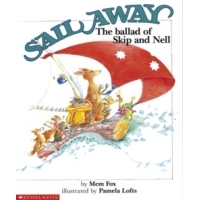
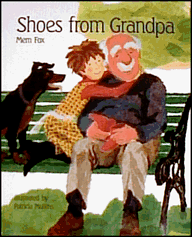
Aussie Author Month – Mem Fox

In Australia we are spoiled for fabulous picture book authors (and illustrators). From the clever prose and gorgeous illustrations of Graeme Base (Animalia; The Waterhole) for older picture book readers to the endearing storylines of Margaret Wild (There’s a Sea in My Bedroom; Kiss, Kiss!) for younger picture book readers. From Australian picture book classics which Australian children have been reading for generations, such as May Gibbs’ Snugglepot and Cuddle Pie, to newer picture books, such as Kathryn Apel’s This is the Mud. A favourite picture book author of mine, and of my children, too, is Mem Fox. We have many of her books on our bookshelf and they are much requested at bedtime. So what is it about Mem Fox’s books that makes both parents, teachers and children alike keep reading them over and over again?

Rhyme

Many of Mem Fox’s books are written in rhyme. As a writer who loves to write picture books, I know just how hard rhyme is to pull off effectively. It’s not just about finding the right words to rhyme, it’s also about rhythm and flow. Mem Fox’s rhymes always flow naturally and beautifully, giving her stories a lovely lyrical quality.

It’s time for bed, little fish, little fish,

So hold your breath and make a wish.” (Time for Bed)

Here is the near sheep. Here is the far sheep.

Here is the moon sheep. And here is the star sheep.” (Where is the Green Sheep?)

Australiana

Mem Fox’s use of Australian animals as characters—characters who personify the Aussie spirit— tied in with other pieces of Australiana (food, places, slang terms), make her books feel like home to Australian readers, who can relate to familiar images and language evoked by Fox. International readers are introduced to peculiar creatures and new experiences from the land ‘Down Under’.

Later, on a beach in Perth, they ate a piece of pavlova.

Hush’s legs appeared. So did her body.

‘You look wonderful, you precious possum!’ said Grandma Poss. “Next stop—Tasmania.’

And over the sea they went.” (Possum Magic)

One night, beside a low camp fire,

They heard the men talk loud

about a boatrace way out west

That’d make all Aussies proud.

One said he’d give his two eye teeth

To be there at the race.

‘My oath, too right!’ the other said,

With longing on his face.” (Sail Away: The Ballad of Skip and Nell)

Repetitive Language

Young children love books with repetitive language and, when reading aloud, children will often join in because they can pick up on the repetitiveness. They can predict what will be said on the next page. My preschooler son will sit down with a Mem Fox book and read the book to himself from memory because the repetitiveness of the text, combined with the pictures, means he can easily remember the story and the words. This is a great precursor to learning to read. Mem Fox’s books are perfect for this pre-reading stage.

“‘Good grief!’ said the goose.

‘Well, well!’ said the pig.

‘Who cares?’ said the sheep.

‘So what?’ said the horse.

‘What next?’ said the cow.” (Hattie and the Fox)

And her sister said,

‘I’ll get you a sweater when the weather gets wetter,

to go with the blouse with the ribbons and bows,

to go with the skirt that won’t show the dirt,

to go with the socks from the local shops,

to go with the shoes from grandpa.’” (Shoes from Grandpa)

Page-turning Storyline

Mem Fox’s stories are written in such a way that the reader just has to turn the page to find out what happens next. The stories often build to the climax. Where is that green sheep? What can Poss eat to make her visible? Will Skip and Nell make the race in time?

If you’re a writer of picture books, check out this very interesting article on Mem Fox’s site about her process for writing Where is the Green Sheep? http://www.memfox.com/green-sheep-secrets.html There are some fantastic gems of advice in there, including this:

” After twenty one years of writing for children, I’ve come to appreciate that the books young children like best fall broadly into two categories: either short books with a pattern, based on rhyme, rhythm or repetition; or short books with a really good story. They don’t like nostalgia books. They don’t like first person books. And they don’t like long books. Stories, or patterns: that’s it.”

For a great overview of Australia’s most popular children’s book authors, have a look at this article: http://www.cultureandrecreation.gov.au/articles/childrensbooks/

A side note in regards to Aussie Author Month:

One of the aims of Aussie Author month is to raise awareness and funds for the Indigenous Literacy Project – a project that aims to raise Literacy levels amongst Inigenous Australians living in rural and remote communities. You can learn more here: http://www.indigenousliteracyproject.org.au/ and you can donate to the project as part of Aussie Author month here: http://www.gofundraise.com.au/page/ausbooks

And don’t forget to check out all the other exciting things happening for Aussie Author Month.

Aussie Author Month – John Marsden

As part of Aussie Author month I’m going to be doing a series of blog posts focusing on some of my favourite Australian authors—authors who have inspired me in my own writing.

For the first post I want to focus on one of my all time favourite authors: John Marsden. I started reading John Marsden as a teenager and he immediately became my favourite teen/YA writer. He also inspired me to really strive for my writing dream; knowing that an Australian could become such a well known author, not just here, but overseas as well, was a big push for me.

Marsden has written a multitude of books over the years, primarily aimed at teens. At one stage I had read every book he’d ever written. In year eight, my English teacher read our class Tomorrow When the War Began (which I’d already read by then)—every student in my class loved it and there was an influx in the library to borrow the next book in the series. Even the boys.

So how is it that Marsden, nearly a decade before the Harry Potter phenomenon, inspired teens, including reluctant male readers, to get reading?

Voice

This would have to be the number one factor in the appeal of Marsden’s books to teens. Marsden has a way of writing teenage voice realistically that draws teens into the story. Teens feel like they’re reading about someone their own age—they can relate to the feelings and thoughts of the character, because it’s how they think and feel. In particular, I find his ability to write in the voice of a teenage girl particularly brilliant (how many grown men could channel the voice of a teenage girl so realistically?).

To be honest, which I swore I’d be, we’d all had those delusions at times. They were only daydreams, to liberate our families, to fix everything, to be heroes… In reality the prospect of doing something like that was so horrifying and frightening that it made me ill to think of it.” (Tomorrow When the War Began, pg. 232)

I was giving your ear an erotic experience and you were giggling and pushing me away. The only thing that stopped me going further was all the people around, and Mr. Rossi. Like, he might be a good bloke, but if he finds two of his students having sex in the middle of an excursion he’s not exactly going to give us a pat on the head and an A in Art.” (Dear Miffy, pg. 75)

Characters

The characters in Marsden’s books come alive from the first page and make you want to know their story. Part of that is their voice, which I mentioned above, but it is also the layers of depth each character possesses. In books like Letters from the Inside and So Much to Tell You, the stories of the main characters unfold layer by layer. From the beginning the reader knows there is more to this character, some secret, and as the story unfolds we get glimpses of the secret, until we find out the whole story. In other stories, such as the Tomorrow series, we see the main character put in tough situations and continually growing as a character through these situations.

I don’t blame you for being scared of me. I don’t like it but I don’t blame you. I’m scared of myself sometimes.” (Letters from the Inside, pg.96)

…I started trembling and sobbing and hugging myself. I leaned against the wall then slid down until I was on the floor. It seemed like something outside me had taken control. It shook me like I was a washing machine. I knew what it was of course. The image of Shannon, lying there naked and tied up, her blood, the death that I saw in her eyes: Where was I supposed to put that?” (While I Live, pg.266)

Description

Part of what makes Marsden’s descriptions so effective is the way they’re written from the character’s perspective. His descriptions give the reader a clear picture, while showing the reader how the character views his/her world. He very rarely alludes to the characters’ physical descriptions, unless it’s relevant.

…Lisa came in, went to her bed and lay on it face down. And after a few moments she began crying! I could hear her. And I could see her shoulders shuddering. Lisa, the strong one, who never cries! It got worse: her crying became louder, uncontrolled, sobbing. From deep, deep down… I fluttered around the dorm wanting to help her.” (So Much to Tell You, pg.39)

… we ran the way rabbits do when they get a sniff of the warren and think they can just make it. We put our ears back, kept close to the ground and went for it… The fence loomed up at me. I dived to go under it. Still like a rabbit. Beside me Fi did the same. As we went down, the first shot wailed above our heads.” (Darkness, Be My Friend, pg. 234)

If you (or your kids) have yet to pick up a book by John Marsden, I highly recommend picking one up.

If you have (or write for) preteen boys, try Staying Alive in Year 5. For teen girls, try So Much to Tell You. For teen boys, try Dear Miffy. And everybody should read Tomorrow When the War Began at least once in their lifetime, it’s a Aussie literature must-read.

A side note in regards to Aussie Author Month:

One of the aims of Aussie Author month is to raise awareness and funds for the Indigenous Literacy Project – a project that aims to raise Literacy levels amongst Inigenous Australians living in rural and remote communities. You can learn more here: http://www.indigenousliteracyproject.org.au/ and you can donate to the project as part of Aussie Author month here: http://www.gofundraise.com.au/page/ausbooks

Helpful Writing Sites and Blog Posts March 2011

I’m excited this month to introduce a new addition to my blog. If you look up at the tabs above you will see a new one titled, ‘Helpful Writing Sites and Blog Posts Masterlist’. In this master list I have gathered all the links from all the past editions of ‘Helpful Writing Sites and Blog Posts’ into one place. This way you won’t have to go searching through all the past editions to find the link you’re looking for. To make it even easier, I’ve put the links under headings, such as: ‘dialogue’, ‘openings’ and ‘queries’, so if you’re looking for information on query writing, go to the ‘queries’ section or if you want a stronger opening, go to the ‘openings’ section. From now on, whenever I do one of these monthly posts, the links will get added to the master list.

Now, onto this month’s edition:

Writing

How to Get Published: A Flowchart

A great flowchart (and checklist) on the writing process and a great way to know if you’re ready to query.

My Writing Success: The ONE Thing That Helped Me Most

Author Jody Hedlund explains the one specific thing that helped her most on her journey towards writing success.

On Story Openings

Using their soon-to-be-published anthology of stories as examples, The Australian Literature Review outlines the elements of effective story opening lines.

Story Skeletons: Teaching Plot Structure with Picture Books

Although this post is meant to be a teaching tool for young readers/writers in the classroom, it’s a great post for writers of picture books as well. It focuses on the basic structures used in picture story books and includes examples of each structure.

Where Should a Second Chapter Start?

There’s always a big focus for writers on getting that first chapter perfect, but what about chapter two? This post looks at building a strong second chapter.

Five Ways to Show Emotion in Your Writing

Based on the book From Where You Dream: The Process of Writing Fiction by Robert Olen Butler, this post looks at expressing emotion in your writing with a focus on showing vs telling.

Genre Novels – Word Count Rules, Subgenres, and Guidelines for Getting Your Book Published

A short guide to word count rules and subgenres for the various genres (fantasy, romance, historical, mystery, thriller, horror, YA, and Western).

Ten Mistakes Writers Don’t See (But Can Easily Fix When They Do)

Before you submit your work, double-check to make sure you haven’t made any of these mistakes that are easy to fix. (Sometimes this is where a critique partner can come in handy.)

NOTE: For number one, I find Wordle is a helpful website for weeding out crutch words. For number nine, reading aloud is a great way to pick up on awkward phrasing.

The Doctor is in the House – Novel Diagnostics

An exploration of common problems found in the beginning of a manuscript that can be an indicator of problems in the rest of the manuscript.

Queries/Pitches

The Twitter Query

A look at how to write an effective query in only 140 characters.

Rites of Submission: Cover Letters and Query Letters

This article includes two sample letters: an example of what not to do (including common mistakes) and a successful letter.

How I Got My Agent (Part 1: The Parts of a Good Query)

Author Susan Dennard shares advice on writing a good query letter, using her own successful query letter as an example.

Synopsis

How to Write a 1 Page Synopsis

A break down of the key elements needed for a one page synopsis. Includes worksheet.

Motivation

On Sticking With It

A reminder from author/agent Mandy Hubbard that is hard to become published, and why it is important to stick to it and not give up.

Social Media

Twitter Hashtags for Writers

Using these writer hashtags on Twitter is a great way to meet fellow writers. A comprehensive list of writer hashtags, including a schedule of writer chats on Twitter.

8 Sentence to Immediately Cut From Your Twitter

These 8 bio mistakes may be costing you followers and you may want to avoid them. Includes two things you may want to include instead.

Blogging Tips: Tips for Increasing Your Followers and/or Subscribers

Rachael Harrie has some great simple tips for building up a following on your writing blog.

Facebook for Authors: How to Get Started

Agent Nathan Bransford gives some helpful tips on starting up a Facebook author page.

For Fun

9 Things Everyone Needs to Know About Writers.

Very funny and very true. Pass this list on to all your non-writing friends.

Speaking of Facebook author pages, I’ve just started one of my own. You can find it here: http://www.facebook.com/JoHartAuthor or on the Facebook link on the sidebar of this blog.

How ‘Sisters Red’ Can Make You A Better Writer

Since I began to really start focusing on my writing seriously (reading writing blogs, writing websites and books on the craft) it has affected the way I read. Now when I read, I sometimes find it hard to really immerse myself in a book because I can’t always switch my writer’s brain off. I pick up spelling and grammatical errors and I think to myself  ‘that’s so cliche’ or ‘this passage is full of purple prose’. So when I find a book that draws me in so deep and is so well written my writer’s voice is nowhere to be found, I know I’ve found a really fantastic book. It makes me wonder, what has this writer done differently to make me fall in love with these characters and keep turning pages well after I should be in bed because I can’t put it down? Because I want to be able to do that in my writing!

I don’t usually do book reviews on here, but this past week I finished two books I found so addictive to read I couldn’t put them down. One was The Princess Diaries by Meg Cabot, which I have been meaning to read for ages (ever since the movie came out). I loved it because the voice in that book was so authentic and real. But, the book I want to explore today is Sisters Red by Jackson Pearce.

Sisters Red by Jackson Pearce

Great Hook

I’m a sucker for fairytale retellings, and in particular Red Riding Hood retellings, which is what drew me to this book in the first place. The concept immediately interested me: The Red Riding Hood characters (in this case two sisters) are attacked by a werewolf when young and grow up into werewolf hunters, aided by their best friend, a woodsman. Talk about a great twist on the old fairytale!

Tense

Many agents and those in the literary world warn against writing in first person present tense because it is so hard to pull off effectively and naturally. Jackson Pearce managed to not only pull off writing Sisters Red in first person present tense seamlessly, she also did it while switching POV between the two main characters of the story (the two sisters). One of the reasons present tense worked so well for this story: there was a lot of action and the present tense allowed me to feel as though I was a part of the action as it was happening.

Voice

The two sisters were so well developed, each with their own individual voice, that even without the header indicating which sister’s POV it was at the start of each chapter, I still would have known which sister was speaking. Both had strong, distinct voices. I was immediately pulled into their story.

Suspense

Talk about nail-biting. Particularly towards the end I couldn’t stop turning the pages because I was so afraid of what was going to happen to the main characters. Pearce kept putting them in tougher and tougher situations and I knew one of them couldn’t possibly come out of it alive, I just didn’t know which one, if any!

Relationships

The relationships between the sisters and between each individual sister and the woodsman are all unique and continually develop over the course of the novel, while always intertwining and affecting each other. Yet no relationship is more important than another. These relationships are always at the centre of the story and drive the plot.

Other Reasons it was Great Writing

There was never a lot of description of the main characters, except when describing Scarlett’s scars, yet even then the description was never detailed, it was wound into the story. She focused more on the characters’ emotions, reactions and motivations.

I also loved that Pearce researched the little details to make them more authentic.

Jackson Pearce’s follow up novel Sweetly (a fairytale retelling of Hansel and Gretel where a brother and sister become witch hunters) is out later this year. I’ll be looking out for it. This for me defines a great writer – I loved her book so much that I can’t wait for her next one to hit the shelves.

If you are a writer, particularly if you are interested in writing YA, paranormal, action or fairytale retellings, this book is worth picking up and reading.

Helpful Writing Sites & Blog Posts February 2011 Edition

Before I do this month’s roundup of helpful writing sites and blog posts, I just want to send out my thoughts and prayers to those in New Zealand affected by the earthquake. If you wish to donate to the New Zealand Red Cross to help out those affected, here is a link: New Zealand Red Cross

Onto the most helpful sites and posts I’ve come across this month:

Writing

Punctuation Made Easy

This is by far the best site on punctuation I’ve found. It covers colons, semicolons, commas, dashes and apostrophes. It is very straightforward and clear and makes understanding how to use punctuation very easy. I always thought I was good at punctuation, but reading so many complicated posts on punctuation on the internet has often left me confused on whether I’m doing it right. This site is now my go to site when I need clarity.

The Very Basics: Ten Things All Writers Need To Do

Ten things writers should do if they want a shot at getting published.

Opening No Nos

Killzone author James Scott Bell outlines opening chapter no nos based on statements by literary agents.

Five Tips for Your First Five Pages

From things you shouldn’t do in your opening to things you should do.

Back to Basics – Dialog

This post explains the difference between a conversation and dialogue.

8 Ways to Pile on the Fear in Your Horror Fiction

Great post for horror writers looking for ways to amp up the fear factor in their writing.

The Power of Touch

A look at the way J.K. Rowling uses touch in the Harry Potter series as a way of showing emotion, rather than telling.

Creating a Magic System

A great post for fantasy writers on creating a magic system that fits best with the world in your novel.

Lovable and Admirable Characters

We all want to create characters our readers will want to read more about. Author Denise Jaden shares some advice she received about qualities your main character should have to ensure he/she is engaging and lovable.

How to Get the Biggest Bang for Your Plot Point

This post outlines where your main plot points occur in your manuscript and what you should be doing at these points to create a deeper connection with your reader.

Tightening Your (Manuscript’s) Belt

A checklist for eliminating unnecessary prose.

7 Ways Glee Can Improve Your Fiction Writing

Joanna Penn uses the popular TV show ‘Glee’ as a metaphor for ways to improve your writing.

Queries

How to Write a Bio for Your Query

Dot point list of what to include and also includes an example of what to do if you have no writing credentials.

What Your Query Says About Your Book

Your query letter is your first impression of your manuscript. This post tells you how much an agent can tell about your manuscript just by reading your query letter.

Query Me Crazy

Corinne Jackson shares an original query letter she wrote that kept getting rejected, tips she received from a literary agent to improve the query and a revised query she wrote using the tips from the agent that resulted in requests for  partials and fulls.

Just for Fun

The 46 Stages of Twitter

For anyone on Twitter, you’ll be able to relate to these ‘stages’.

When to Murder or Marry Your Darlings – Guest Post

Today I’d like to welcome freelance writer and blogger Maria Rainier to my blog.

When to Murder or Marry Your Darlings

You’ll find no relationship advice here. You might, however, find hope.

Most writers are not only familiar with William Faulkner’s blood-curdling wisdom, “Kill your darlings,” they’re haunted by it to the point that they take a carving knife to their laptops in the editing stages of a manuscript.  Sir Arthur Quiller-Couch beat Faulkner to the punch, however, and is the lesser-known genetic father of the original quote:

“Whenever you feel an impulse to perpetrate a piece of exceptionally fine writing, obey it—whole-heartedly—and delete it before sending your manuscripts to the press.  Murder your darlings.”

When Your Darlings are Dull

So, that lyrical paragraph that flows like winter-fresh water down spring-green hills, admittedly ad nauseum?  Cut it.  The sentence that, while choppy, is so delightfully tongue-in-cheek you could choke?  Give it up.  And that character who’s so saccharine and giggly that you feel really bad about sending her to the chopping block?  Well, that’s not exactly what Quiller-Couch or Faulkner meant, but go ahead and bring the axe down on that one, too.  Less is more, after all.

That’s the theory, anyway.

When Your Darlings are Darling

We can’t all of us be Charles Dickenses or Tolkiens and write entire pages of descriptions without anything happening and without losing readers.  Had Quiller-Couch met with either of these beloved authors, those bits would probably have been cut.  Can you imagine, though, a 500-page Lord of the Rings novel?

Sometimes, your darlings are there because you love them for reasons no one else will and you’re blinded by your own affection to know better.  Other times, you love your darlings because they’re delicious.  Murdering them would be a disservice to your audience.  By the time you’re done carving up your edited manuscript, it looks like Mr. Skellington who’s probably still hanging around in your old high school biology classroom.

If you can’t tell already, I love words.  Asking me to murder my darlings is like telling me to shave my head.  Sometimes, it’s refreshing and I can hide away the loose tendrils in a folder somewhere in My Documents.  Other times, I notice that after my darlings are gone the manuscript seems to make less sense.  It looks barren and cold, and whatever words I add in to patch up the disjointed parts comes in unevenly and looks, well, fuzzy.

Whenever this seems to be the case, do what everyone else has told you to do: sleep on it.  Wake up, shower, take the dog to the dog park, and then return to your laptop with a cup of tea and examine the massacre.  Feel free to make the mistake of asking your significant other what he or she thinks.  (“Yeah, that looks fine.  Was there anything else you wanted, honey?”)

Other times, however, you can tell Quiller-Couch and Faulkner to mind their own business.

Maria Rainier is a freelance writer and blog junkie. She is currently a resident blogger at First in Education, where she’s been performing a bit of research into the gender wage gap problem. In her spare time, she enjoys square-foot gardening, swimming, and avoiding her laptop.

Helpful Writing Sites & Blog Posts January 2011

The first helpful writing sites blog post for the year. I’ve come across quite a few good ones this month.

Writing Advice

Writing in the Age of Distraction

Tips on how to balance writing with social media/the internet. What I most like about this post is that Cory Doctorow outlines how the internet has benefited his writing as much as it’s been a distraction and that there can be balance – you don’t have to black-ban yourself from the internet to get writing done.

Back Story and Exposition

Brooke Johnson talks about mastering the skills of back story and exposition without resorting to the dreaded ‘info-dump’.

How to Write Intriguing Male and Female Characters

A post on how understanding gender differences can improve your writing in any genre.

Want to Get High (Concept)?

A post explaining what makes a story ‘high concept’.

The Increasing Importance of the First Chapter

Author Jody Hedlund explains why the first chapter is so important. She also includes a link to a post on ‘Potential First Chapter Problems’.

100 Stories for Queensland Update

While the submissions for the 100 Stories for Queensland Anthology closes today (there’s still just over 12 hours left to submit – it’s for a great cause), this post is worth reading if you are a short story writer. Scroll down the page a little and Nick Daw gives some great advice on writing short stories.

Queries

Is the Query System Dying?

Author Jody Hedlund talks about query statistics and how you can improve your chances of getting an agent.

The Difference Between ‘Pitch’ and ‘Query’

Query Shark, Janet Reid, outlines the difference between giving a verbal pitch to an agent and writing a query.

Your Professional Bio: Query Letter and Cover Letter Tips for Writers

As part of a query or cover letter, writers are asked to include a bio paragraph. This post outlines the things you should and shouldn’t include in your bio paragraph, and what to do if you have no writing credentials.

The Biggest Mistakes Writers Make When Querying Literary Agents

This is a long post, but well worth reading. J.M. Tohline e-mailed 100 literary agents and asked them the same question, “What is the single biggest mistake writers make when querying you?” This post looks at the answers received from these agents, including some of the detail agents went into when answering.

Synopses

How to Write a Synopsis for Your Novel

7 steps to writing an effective synopsis.  This post gives advice on how to avoid ending up with a boring summary of your story (‘and then this happened and then that happened’), and tells you how you can include the emotional twists and turns that make your story interesting.

Manuscript Submission

Checklist for Submission

This truly awesome checklist has been compiled by an editor/publisher. The comprehensive checklist includes everything you need to remember when submitting your manuscript. It even includes a handy printable version with check boxes.

Formatting Your Manuscript – The Silent Scream

All the things you can do to ‘keep your editor’s hair from turning white’.

*image by nuttakit

How Spell Check CAN Be Helpful When Proofreading

As a writer I tend to ignore spell check most of the time, after all it doesn’t pick up homophones like there/their/they’re and it will pick up any names or words it doesn’t recognise (quite annoying for a fantasy writer like me). However, spell check  can be helpful, especially when it comes to that final proofread.

Picking up typos.

When reading over your work for spelling mistakes the human eye can sometimes overlook words if they are only missing one letter or sometimes even if they have an extra one. Spell check on the other hand will recognise that ‘publicty’ should be ‘publicity’ or that ‘intellligent’ should be ‘intelligent’. Of course, if you have missed the ‘e’ on the end of ‘one’ and the word reads as ‘on’ it probably won’t help, but it can help pick up some of those mistakes you’ve overlooked.

Grammar Check

If you enable grammar check as well as spell check, it will often pick up on those words that sound the same, but are spelled differently if they are used in the wrong context. For example if you leave the apostrophe out of ‘it’s’ in the sentence ‘Its a sunny day’. Grammar check is also a good way of seeing how often you have used the passive voice in your writing as it will pick up sentences written in the passive voice. I don’t take all of grammar check’s suggestions on board, the same way I don’t take all of spell check’s suggestions on board, because it’s not always right (why would I put a comma after Jane when I type ‘Jane said’?), but it can be helpful.

Readbility

If you enable readabilty statistics when you do a spell check, at the end it will spit out a bunch of helpful statistics about your piece of writing. The part of this I find most helpful is the section headed ‘readability’. In my program it gives me three statistics: Percentage of passive sentences; Flesch reading ease; and Flesch-Kincaid Grade level. The percentage of passive sentences compares how many passive sentences you have in comparison to how many active sentences you have. Basically you want this percentage as low as possible. If you score something like 50% you know you have a big problem, try to aim as low as possible, for example 2%. The Flesch reading ease scores your writing on how easy it is to read – the higher the score, the easier it is to read. Look here for a breakdown on how this works and what the scores mean. Finally, the Flesch-Kincaid Grade level tells you which grade level can easily read your writing. For example, if your grade level is five, then your writing can be read by a fifth-grader. How can this help your writing? If your novel is aimed at eleven-year-olds, then obviously a grade level of nine is going to tell you your writing may be too complex and hard to understand if read by your target readership.

Just remember, in the end you make the final decision and you don’t have to blindly follow spell check or grammar check’s suggestions. Do what you know is right for your writing, but even just considering their suggestions makes you think about your writing more, which in turn makes you a better writer.