100 Stories for Queensland

It feels as though Mother Nature really has it in for Australia this summer. Currently, bushfires are raging in Perth. Only days ago, category 5 cyclone Yasi hit Northern Queensland. In December 2010 and January 2011 major floods affected seventy-five per cent of the state of Queensland, including Brisbane (its capital city) causing major damage and loss of life. My brother lives in Queensland and thankfully lives in an area not affected by either the floods or the cyclone, but many other people have been affected.

Watching the devastation unfold on television and reading the heart-wrenching stories around the web left me in shock. But, as with the devastating bushfires two years ago, it has been uplifting seeing not only Australians, but those around the world reaching out to help those affected.

The writing community has pulled together in several ways to help raise funds. In January several writers organised a charity auction. Writers from around the country donated books and offers to critique manuscripts to raise money for the Premier’s Disaster Relief Appeal. Then, following in the tradition of 100 stories for Haiti and 50 stories for Pakistan, a call was put out for short stories to be included in an anthology to be titled 100 stories for Queensland. I knew without a doubt I wanted to submit –  to be a part of something that could help raise much needed funds for flood-affected Queensland.

The submission guidelines called for uplifting stories, and my first thought was to submit a comedic rhyming story I wrote last year and had been sitting idly in a folder on my computer. I soon found out, however, that the anthology wasn’t accepting rhyming stories, so it was back to the drawing board. As the days drew closer to the closing date, I started to panic I wouldn’t find inspiration for a story to submit. Finally, an idea developed. A story about a simple wish – about hope.

I wrote and rewrote and edited and proof-read. I passed it on to beta readers, including my friend Rachel who happens to be a history buff and was able to set me straight on a few points I’d overlooked. I submitted right on the deadline.

Last week, I found out my story had made the long list. Today, I found out it made the final list and will be included in the anthology.

My story is called ‘A Penny for a Wish’, but my simple wish is this: When the anthology is released on the 8th of March, please think about purchasing a copy as 100% of the sales profits will be going towards flood relief in Queensland. Two years ago in the Victorian bushfires, one of my best friends lost everything – her house, her property and all of her possessions. I’ve seen first hand how much these funds can help towards rebuilding someone’s life when they’ve lost everything. And even if you don’t want to read some fantastic stories by some amazing authors, consider donating in some other way.

P.S. I just found out about another great writer initiative raising money for flood relief. Writers on Rafts involves a multitude of fantastic Australian authors offering a multitude of prizes. All money raised goes towards the Premier’s Flood Relief Appeal and you can enter as many times as you like. Winners are drawn Friday 25th February 2011. (I believe the competition is open to Australian residents only on this one.)

Why You Should Double-Check Submission Guidelines

Only a couple of months ago I compiled a list of publishers to query. I made up a spreadsheet with details such as contact details, whether they accept e-mail or postal submissions and a link to their submission guidelines pages.

Today as I was polishing up a query letter to send out to one of the publishers I thought I should double-check their submission guidelines. I’m so glad I did, because some of their guidelines had changed drastically since my last visit. Their biggest change: previously they only accepted postal submissions, now they only accept e-mail submissions (postal submissions are now ignored). Imagine if I had simply gone by the details I had saved only few months ago – I would have been prepared to send my submission by post.

On double-checking another publisher’s guidelines I noted they are no longer accepting unsolicited submissions. If I hadn’t checked, I would have sent my submission and it would have been a waste.

The lesson here is to ALWAYS double-check the submission guidelines before you send, even if you think you know them already. Guidelines change, submissions close or open and editors/agents may leave. Yesterday the guidelines may have said to post your letter with your first three chapters to Paul Newton, but today the guidelines may say to e-mail your letter with a synopsis to Lisa Simpson or submissions are now closed until June.

And if you’re the kind of person to keep a spreadsheet or Word document with publisher details, make sure you update it regularly (and still double-check the publisher/agent’s website before you send).

Helpful Writing Sites & Blog Posts January 2011

The first helpful writing sites blog post for the year. I’ve come across quite a few good ones this month.

Writing Advice

Writing in the Age of Distraction

Tips on how to balance writing with social media/the internet. What I most like about this post is that Cory Doctorow outlines how the internet has benefited his writing as much as it’s been a distraction and that there can be balance – you don’t have to black-ban yourself from the internet to get writing done.

Back Story and Exposition

Brooke Johnson talks about mastering the skills of back story and exposition without resorting to the dreaded ‘info-dump’.

How to Write Intriguing Male and Female Characters

A post on how understanding gender differences can improve your writing in any genre.

Want to Get High (Concept)?

A post explaining what makes a story ‘high concept’.

The Increasing Importance of the First Chapter

Author Jody Hedlund explains why the first chapter is so important. She also includes a link to a post on ‘Potential First Chapter Problems’.

100 Stories for Queensland Update

While the submissions for the 100 Stories for Queensland Anthology closes today (there’s still just over 12 hours left to submit – it’s for a great cause), this post is worth reading if you are a short story writer. Scroll down the page a little and Nick Daw gives some great advice on writing short stories.

Queries

Is the Query System Dying?

Author Jody Hedlund talks about query statistics and how you can improve your chances of getting an agent.

The Difference Between ‘Pitch’ and ‘Query’

Query Shark, Janet Reid, outlines the difference between giving a verbal pitch to an agent and writing a query.

Your Professional Bio: Query Letter and Cover Letter Tips for Writers

As part of a query or cover letter, writers are asked to include a bio paragraph. This post outlines the things you should and shouldn’t include in your bio paragraph, and what to do if you have no writing credentials.

The Biggest Mistakes Writers Make When Querying Literary Agents

This is a long post, but well worth reading. J.M. Tohline e-mailed 100 literary agents and asked them the same question, “What is the single biggest mistake writers make when querying you?” This post looks at the answers received from these agents, including some of the detail agents went into when answering.

Synopses

How to Write a Synopsis for Your Novel

7 steps to writing an effective synopsis.  This post gives advice on how to avoid ending up with a boring summary of your story (‘and then this happened and then that happened’), and tells you how you can include the emotional twists and turns that make your story interesting.

Manuscript Submission

Checklist for Submission

This truly awesome checklist has been compiled by an editor/publisher. The comprehensive checklist includes everything you need to remember when submitting your manuscript. It even includes a handy printable version with check boxes.

Formatting Your Manuscript – The Silent Scream

All the things you can do to ‘keep your editor’s hair from turning white’.

*image by nuttakit

Why You Shouldn’t Ask Your Spouse’s Opinion

Many writing sites will tell you that when you ask someone to critique/beta read your work you should never ask your spouse or mum or anyone closely related to you. The reason for this is that they will most likely give you a biased view because they don’t want to hurt your feelings. I’m lucky enough to have both a spouse and mum who are very honest with me, and it’s something I appreciate, because I’m always openly honest (I’m a terrible liar).

I found my husband to be a fantastic sounding board in the drafting stage of my novel. I would ask his opinion on certain plot points, if he thought there was enough tension, if the ending was strong enough, etc. As yet he’s never actually sat down and read my novel. I thought in light of his usual honest opinions I would ask him to read my pitch for some feedback. This is our conversation:

Hubby (having just finished reading my pitch): Uh-huh

Me: So what did you think? Does it make you want to read the book?

Hubby: It’s about a girl.

Me (rolling my eyes): If the main character was a boy would you read it?

Hubby: I don’t read books. (This is true, he’s never been a reader and hasn’t read a novel since he was forced to in high school.)

Me: Pretend it’s for a movie, would you watch the movie?

Hubby: If the girl was hot.

Me: …

Hubby: Maybe you should ask someone else to read it. Someone who knows about this kind of thing.

All I can say is, thank goodness I have a great critique partner who does know about this kind of thing. Thanks Beth!

Blog Award

I’m posting a little later this week than I intended (there goes my New Years Resolution to blog consistently on the same day each week). I just got back from a little getaway with my husband to celebrate our wedding anniversary and I’m feeling relaxed and refreshed. I was surprised to find when I arrived back that I had a message telling me I’d received a blog award from the lovely Brooke Johnson over at brookenomicon.

I’ve never received one of these kinds of awards before, so I hope I’m following the rules correctly.

Seven Facts About Me

1. I have been writing stories since I could first wield a pencil and I’ve always been drawn to fantasy. I remember when I was about seven I wrote a story about my best friend turning into a fairy. Back then I thought I’d written a chapter book, but it was really only five pages (with illustrations).

2. I have an absolute phobia of snakes, yet I live in Australia on a farm where snakes are pretty much a given.

3. At school I loathed computer class and nearly failed one semester, now I love computers and practically live on mine.

4. One of my biggest writing idols is Australian author John Marsden. I actually got to meet him once as a teenager and got his autograph. I still have it to this day. (Everyone go read one of his books – he’s the master of YA voice.)

5. Whenever I go out for dinner I nearly always order carbonara – it’s my favourite dish. My mum used to make it for me from scratch, and even though I know how to make it from scratch too, I rarely ever make it for myself.

6. I wrote my first complete novel as a teenager and got enough courage to send it to a publisher. It got rejected and I was heartbroken. I was too scared to submit it to any other publishers after that. In hindsight I shouldn’t have let one rejection get me down, but on the other hand, looking back at that manuscript, I don’t think I would have had much luck with any other publishers anyway. It needed a lot more polishing and I needed to hone my writing skills a lot more at that stage.

7. I have never travelled overseas (I’ve never even been to Tasmania), but if I ever went overseas it is my dream to travel Europe.

And to pass on the award to some fellow writers’ blogs…

The Peevish Penman

Harry Potter for Writers

Beth Hull

Rach Writes

Karen Collum

Kathryn Apel

Kangaroobee’s Blog

Be sure to check them out.


How Spell Check CAN Be Helpful When Proofreading

As a writer I tend to ignore spell check most of the time, after all it doesn’t pick up homophones like there/their/they’re and it will pick up any names or words it doesn’t recognise (quite annoying for a fantasy writer like me). However, spell check  can be helpful, especially when it comes to that final proofread.

Picking up typos.

When reading over your work for spelling mistakes the human eye can sometimes overlook words if they are only missing one letter or sometimes even if they have an extra one. Spell check on the other hand will recognise that ‘publicty’ should be ‘publicity’ or that ‘intellligent’ should be ‘intelligent’. Of course, if you have missed the ‘e’ on the end of ‘one’ and the word reads as ‘on’ it probably won’t help, but it can help pick up some of those mistakes you’ve overlooked.

Grammar Check

If you enable grammar check as well as spell check, it will often pick up on those words that sound the same, but are spelled differently if they are used in the wrong context. For example if you leave the apostrophe out of ‘it’s’ in the sentence ‘Its a sunny day’. Grammar check is also a good way of seeing how often you have used the passive voice in your writing as it will pick up sentences written in the passive voice. I don’t take all of grammar check’s suggestions on board, the same way I don’t take all of spell check’s suggestions on board, because it’s not always right (why would I put a comma after Jane when I type ‘Jane said’?), but it can be helpful.

Readbility

If you enable readabilty statistics when you do a spell check, at the end it will spit out a bunch of helpful statistics about your piece of writing. The part of this I find most helpful is the section headed ‘readability’. In my program it gives me three statistics: Percentage of passive sentences; Flesch reading ease; and Flesch-Kincaid Grade level. The percentage of passive sentences compares how many passive sentences you have in comparison to how many active sentences you have. Basically you want this percentage as low as possible. If you score something like 50% you know you have a big problem, try to aim as low as possible, for example 2%. The Flesch reading ease scores your writing on how easy it is to read – the higher the score, the easier it is to read. Look here for a breakdown on how this works and what the scores mean. Finally, the Flesch-Kincaid Grade level tells you which grade level can easily read your writing. For example, if your grade level is five, then your writing can be read by a fifth-grader. How can this help your writing? If your novel is aimed at eleven-year-olds, then obviously a grade level of nine is going to tell you your writing may be too complex and hard to understand if read by your target readership.

Just remember, in the end you make the final decision and you don’t have to blindly follow spell check or grammar check’s suggestions. Do what you know is right for your writing, but even just considering their suggestions makes you think about your writing more, which in turn makes you a better writer.

An Exercise in Pitch Writing

I’ve been working on my pitch for my YA fantasy novel this past week and I couldn’t help feeling my pitch wasn’t hooking the way I wanted it too. So I came up with a little exercise to help inspire me to make my pitch hook more and I believe it has helped me write a more effective pitch. I thought I would share it with my fellow writers.

STEP ONE

Go to your bookshelf and find books aimed at the same age group and same genre (if possible find books with a similar premise/catalyst) as your novel. For example, my novel is a YA fantasy where the main character is transported to a strange land, so I picked books like The Wizard of Oz and The Lion, the Witch and the Wardrobe.

STEP TWO

Have a look at the blurbs of each book, then on some note paper (or on Word) write out a blurb for your own story based on the blurb for each book. For example, this is the blurb on the back of Alice in Wonderland:

When Alice decides to follow the white rabbit down a rabbit hole, it is the start of a most extraordinary adventure in the nonsensical world of Wonderland.

There she meets some strange and delightful characters, including the King and Queen of Hearts, the Mock Turtle, the Mad Hatter, the March Hare, the Duchess and the grinning Cheshire Cat.

Now here is the blurb again rewritten using my own novel:

When Katie is transported to a strange woodland, it is the start of a dangerous and magical adventure in the mysterious parallel world of Middle Realm.

There she meets new friends and enemies, including oddball Travis, twins Hannah and Ava, an old healer woman, a reclusive wizard and the foot soldiers of an evil sorceress.

STEP THREE

Grab a highlighter and go through all your blurbs (I ended up with six altogether). Highlight the lines that stand out at you. For example, in the blurb above I highlighted ‘the foot soldiers of an evil sorceress’.

STEP FOUR

Rewrite the highlighted parts on a separate piece of paper and cut them out individually (or if you can’t be bothered doing that, you could just cut out the highlighted parts without rewriting them).

STEP FIVE

Rearrange them until you work out a suitable order and stick them onto a piece of plain paper in that order. Use a pen to fill in parts that are disjointed or cross out parts that are repetitive. One of my blurbs was in a different tense to all the others, so I had to change the tense with that part to make it fit.

STEP SIX

Write it out neatly in its new form. Use this ‘blurb’ as inspiration for writing your pitch. Just remember when you write your pitch to avoid ambiguous words like ‘mysterious’, etc., which are often used on book blurbs. And please DO NOT plagiarise the wording of the original book blurbs in your pitch. Make the pitch your own. This is all about inspiration, not copying from other books.

Have fun with it and see if you can’t improve the hook part of your pitch.

Favourite Helpful Writing Posts 2010

Usually at the end of each month I do a roundup of the best helpful writing sites and blog posts I come across during the month. This month I will be doing things a little differently. For those who follow me on Twitter, or read my post from last week, you will know I have been a bit disconnected from the internet this past month due to some bad news I received early in the month. For those who don’t follow me, I found out I lost my baby early this month and I’ve been having a hard time emotionally. I’m starting to get back into the swing of things now, but as a result of my disconnectedness from the net I haven’t collected many great sites this month to share. Instead I’ve decided to do a roundup of a few of my favourite posts from throughout the year, ones I thought were so helpful I bookmarked them for future reference.

Helpful Writing Posts

Key Elements of Strong Fiction

Shennandoah Diaz writes about creating the foundation of strong fiction by establishing dynamic characters, an intriguing plot, a compelling voice, and a vibrant setting. She gives great examples to illustrate her points.

Top 8 Tips for Writing Dialogue

Ginny Wiehardt outlines eight ways you can improve your dialogue so it sounds more realistic, advances the story and fleshes out your characters.

Dialogue Tags

A great little reminder on the correct use of dialogue tags with examples of correct and incorrect usage.

Evil Overlords Lists

An excerpt from Teresa Neilsen Hayden’s lecture on ‘Stupid Plotting Tricks’ giving a look at cliches revolving around villains and the genres of science fiction and fantasy.

Counting Chickens: A Few Words About Word Counts

For anyone writing any form of kidlit (from picture books to young adult  novels), Hope Vestergaard’s post is handy to bookmark as a reminder on appropriate word counts for kidlit.

Workshop: Writing the Novel Synopsis

For any writer who dreads writing a novel synopsis or isn’t sure how to go about writing one, this workshop by Sheila Kelly shows you how to write a synopsis. She outlines the main elements you need to include and how to format it.

Helpful Writing PDFs

Book in a Month Worksheets

These worksheets are primarily geared towards planning for NaNoWriMo, but they are great planning tools for anyone thinking about starting a new novel idea. There’s a planning sheet for everything from story idea maps to character sketches to act one, two and three plot goals.

Eleven Senses – Who Knew?

I’ve mentioned this resource a few times on this blog. It outlines not only the five main senses we use, but six extra ones as well. It includes some writing exercises using the various senses and a great list of words for each sense (so you don’t always have to fall back on the same old sense words all the time, like saw and heard).

I hope everyone is enjoying their holidays and you all have a happy and safe new year!

Go Where It’s Scary — Into the Abyss (Guest Post by SP Sipal)

Before I introduce my guest poster I want to apologise for my lack of posts this month. For anyone who follows me on Twitter you will know I had some bad news early this month and I’ve been having a hard time dealing with it. I was feeling guilty about my lack of posts, so the lovely Susan Sipal of Harry Potter for Writers kindly offered to do a guest post for me.

Today Susan will be writing on the topic ‘Go Where It’s Scary — Into the Abyss’. Welcome Susan.

Years ago, whenever I was creatively procrastinating upon a tough job at work, or doing my best to avoid a task that involved conflict, a guy in my office would give me some of the best advice I’ve ever gotten in life: Go where it’s scary.

The only way to work through the problem, to get to the other side, is to face it head-on. Whimping out and avoiding it, as I liked to do, truly didn’t do me any good. It just prolonged the pain.

I’ve always remembered my colleague’s advice, and that phrase, “Go where it’s scary,” comes to mind whenever I find myself dragging toward something I dread but know that I must do. This is especially true with my writing. Being the polite Southern girl that I am, I often hesitate to inflict conflict upon my characters, or even worse, have them confront and deal with their innermost pains and fears.

As in life, confronting and travelling through our fears is an essential part of being human, it’s even more so with our characters, our heroes. And no part of story construction addresses “go where it’s scary” more directly than the approach to the innermost cave of the Hero’s Journey.

The Hero’s Journey and its Abyss, or Inmost Cave, is a concept described within Joseph Campbell’s groundbreaking The Hero With a Thousand Faces. A comparative mythologist, Campbell studied myths separated by continents, centuries, and cultures and discovered that most shared a basic framework, the hero’s quest, which he broke down into 17 steps. Christopher Vogler, a scriptwriter and film producer, simplified Campbell’s work into 12 steps in The Writer’s Journey, making it more accessible to writers and the film industry. Campbell’s and Vogler’s Journey have been used in storytelling in everything from Star Wars to About a Boy to Harry Potter to insertyourowntitlehere.

At the heart of the Hero’s Journey is the sending forth of the hero from his home clan and his victory over their adversaries, which culminates in his triumphant return with a reward that enriches the clan as a whole. You can see why this basic story structure would have primordial appeal to the human psyche — it is how any human unit, whether that unit be a clan, a family, or a nation — has survived and prospered throughout millennia.

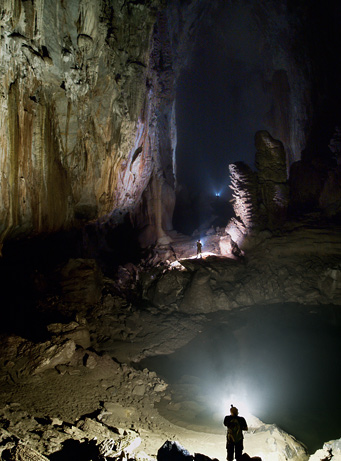
The Abyss is the point in this journey where the heroine approaches her most intense conflict, her Ordeal. It is in the innermost cave that she must face and conquer both her outward foe and her own personal demons. Cave analogy harkens back to our days when the darkest places we had to fear held deadly creatures that often lurked deep in the places we called our homes. The abyss, or underworld, was the place of loss, where all bodies must eventually travel…that final, unknowable journey.

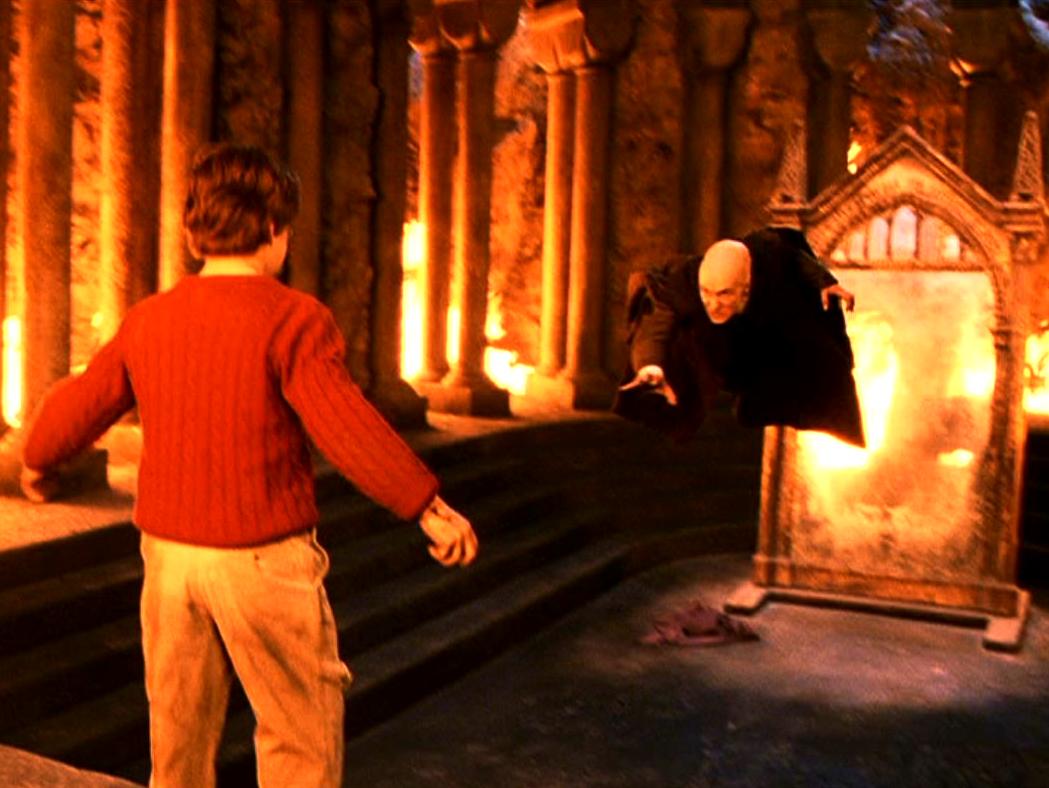
Whether in the underground, snake-filled “Well of Souls” where Indiana Jones recovers the ark but loses it to the Nazis, or the lonely, cave-like home of Will Freeman in About a Boy where Will must confront the emptiness of his life, to the underground chamber beneath Hogwarts where Harry confronts Voldemort and the loss of his parents in Sorcerer’s Stone/Philosopher’s Stone — modern storytellers are still using underground/cave imagery to set their Ordeal.

In the abyss, the hero meets death and triumph over his deepest fears, which symbolizes his death to his old life and resurrection to the new. Victory is won — whether that triumph is achieved through vanquishing the antagonist or through atonement with his Shadow. Or, as Joseph Campbell said, “It is by going down into the abyss that we recover the treasures of life. Where you stumble, there lies your treasure.”

And if our hero can do it in a story, then we can do it in real life. We live vicariously through our hero’s success. If done well, when the book is closed or the movie concluded, we then feel equipped to go back into our life and confront our own demons and monsters. This is the heart of catharsis, and this is why the bestselling books and best remembered movies are those where the hero triumphs over a tremendous obstacle with deep, personal ramifications. It does not matter whether those obstacles are pitched on the intensely personal level or the high-stakes world-wide scale.

As writers, we must remember to send our heroine into the heart of fear. She must go where it’s scariest for her to venture, face those fears head-on, triumph and be forever changed. Only in this way can she return to her world to enrich her clan…and our reader.

Susan Sipal is a writer and mother from the United States. She is also a Harry Potter analyst and speaker. She writes the blog Harry Potter for Writers.

Picture credits: National Geographic, Joseph Campbell’s The Hero With a Thousand Faces and Warner Brothers’ Harry Potter and the Philosopher’s Stone.

Helpful Sites November 2010 edition + NaNoWriMo Results!

I have to start this post by yelling very loudly “I DID IT!” I reached 50,000 words on the 30th November (today) at 4.10pm Australian time. I’d actually fallen behind my word goal the last few days, meaning I had to write around 2,100 words today to hit 50k. It was very exciting putting my 50,000 words into the NaNoWriMo word count evaluator and receiving my winner’s certificate. Thank-you so much to everyone who cheered me on and supported me throughout the month of November. And in case you don’t believe me, here’s my NaNoWriMo page (complete with my final word count).

Now onto the helpful websites and blog posts for the month of November. There aren’t quite as many as usual, since I’ve been writing more than scouting for sites, but there were a few good ones. I’ve even included a few at the end for those finishing up NaNoWriMo and in need of a laugh.

Resource Roundup – NaNoWriMo Edition

The bluestocking blog did a great round up of helpful and insightful posts relating to NaNoWriMo earlier in the month, but there are quite a few helpful writing links in there worth checking out even though NaNo is now over.

Plotting Your Story

Brooke Johnson, self-proclaimed panster, outlines how she still does some plotting when she writes.

7 Things Your Characters Do Too Much

I know I’m guilty of a couple of these!

The Five Elements of a Novel Query

The first post in a blog series on writing novel queries, this post outlines the five elements that should be included in your query, and follows up with some examples.

5 Ways to Make Your Novel Helplessly Addictive

Five things you should be including on every page of your book to ensure your reader keeps on reading.

6 and 1/2 Ways to Impress an Agent

Literary agent Tina Wexler outlines six and a half ways to impress an agent.

And now for the fun stuff (because I know after writing 50k words in a month I need some relief)…

Lemony Snicket’s Pep Talk

Anyone who is an official NaNoWriMo participant would have got this in their inbox during November, but if you’re not an official participant or you never got around to opening the e-mail you should read this. Quite funny.

So You’ve Discovered That You’re A Fictional Character

Humourously outlines all those amateur mistakes we writers make when we first start writing by speaking with a fictional character who is the result of bad writing. (I’m sure a few of our NaNoWriMo characters are still in this stage until we go back and start editing.)

So You Want To Write A Novel

Weren’t we all that naive when we first started out, before we started reading agent blogs and realising there is more to writing than just slapping words on a page? I got a good giggle from this video.

A big congratulations to everyone who particpated in NaNoWriMo this month, whether you reached 50,000 words or not.

A writing blog