Category Archives: Writing skills and techniques

Writing Compelling Characters

Harry Potter and Hermione Granger

Compelling means to evoke interest, attention or admiration and that’s exactly what you want your characters to do when writing a story, whether it be a novel or a picture book. You want your character to be interesting to the reader, no one wants to read about a boring character. You want your character to grab the reader’s attention, you don’t want your reader’s attention to wander to what they are going to be cooking for dinner tomorrow night because your character has failed to grab their attention. So how can you write a compelling character?

Bring Your Character to Life

Your characters should come across as real people, fully developed with hopes, desires and flaws. A flat 2D character is not going to keep your readers glued to the page and they certainly won’t care what is going to happen to that cardboard cutout character. Some ways you can create a more realistic character:

1. Write up a character bio, including their flaws and strengths.

2. Do character interviews, ask in-depth questions that will show personality.

3. Do a character collage, cut out pictures from magazines that represent your character.

You can do all this before you start writing to have a good picture of your character in your head before you start, or do it before editing if you prefer. You don’t have to include every detail from your character bio in your story, but having it there will help form the character in your mind.
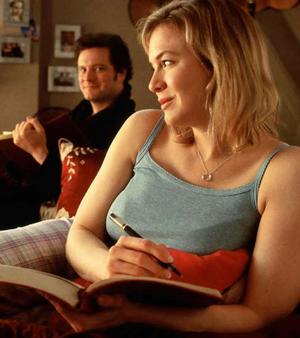
Bridget Jones

Get Inside Your Character’s Head

This applies even if you’re writing in third person. As you write, imagine yourself in your character’s position.

What would you do if you were your character?

How would your character react to certain situations?

How does your character experience the world around him/her?

This is connected to making your character realistic, but it involves delving even deeper into your character’s psyche. You want your reader to not only see your character as a real person, but to be able to connect with your character on a personal level. You want your reader to experience the same emotions as your character. By stepping into your character’s shoes as you write, the character comes across as more personal and there is a better chance your reader will find themselves inside your character’s head too.

Give Your Character a Goal

Give your character something they want to achieve and show why they want it so badly. Give them obstacles along the way to achieving the goal, make it hard for them and allow them to fail at first (there’s nothing less compelling than a character who achieves things too easily or without consequence). Your character’s goal may change along the way, and that’s OK as long as it makes sense.

Ellie Linton (Tomorrow When The War Began)

For more ideas on how to write a compelling character check out Elana Johnson’s post ‘How to Write Compelling Characters‘ where you can find links to a variety of blogs blogging on this topic.


Blogiversary Celebrations: Part Three – Interview with Agent Intern C.A. Marshall

I would like to welcome special guest, and winner of the Best Agent Intern Site award, Cassandra Marshall to my blog. Cassandra has kindly agreed to answer some questions for me to share with you.

As a writer, what have you learnt through being an editor and an agent intern that you now apply to your writing?

Each activity helps the other. I can use what I see in the queries pile to help write my own query so it stands out (and I have four full requests in two weeks to prove it! Yay!) and if I see mistakes over and over again in a clients MS, I’ll check my own for those mistakes too. It’s like the quote, “It takes a village to raise a child” except it’s more like, “It takes a writing community to write a book.” The more you learn and then share what you learn, the better for all of us.
(GD: Congratulations on the full requests!)

As an editor, what is the most common mistake you see when editing a manuscript?

Not capturing a specific voice. Teens using outdated slang or phrases, characters that are formulaic and cliche, stuff like that. The more you read in your genre, the better you will be at distinguishing voice.

Do you have any tips for writers who might be in the process of revising their manuscripts?

Save your changes. Use “track changes” if you edit in Word. Save the bits you cut out in another file. You never know if a revision means that you could use a scene you’ve already written and you’ll be sad that you got rid of it. Or it’s also possible for those scenes inspire more books.

What is the best piece of advice you have for aspiring authors?

Read. Read as much as you can in your genre to figure out what does and does not work. Read submission guidelines for each agent/publisher and follow them exactly. Read agent and fellow writer blogs and become part of the community.

Thanks for having me Jo!

C.A. Marshall is a freelance editor, lit agent intern, YA writer, and loves to play with her dog Mollie. She dreams of one day owning a small house near the water, preferably in England, with a shelf full of books she has written and has helped others to write. She can be found in Emmett, MI and at camarshall.com

Be sure to check out the Free Edit Contest on Cassandra’s blog. One lucky person will win a FREE substantial edit for up to 100K words.

Thanks so much for being here, Cassandra!

(P.S. To all those waiting for the results of the Graceful Doe and Peevish Penman’s blogiversary contest, the winners will be announced in the next post. Not long now!)

Helpful Writing Sites and Blog Posts – August 2010 Edition

It’s that time of the month again, time to give a round-up of all the helpful writing sites and blog posts I’ve come across in the past month. I have quite a few this month so I’ll break them up into categories.

WRITING TIPS

Bring Your Characters to Life

Some great ideas on how to really get into your character’s head and make him/her come alive.

How to Write About a Real Location if You Haven’t Been There

Joanna Penn gives some ideas on how to write a location even if you’ve never been there.

Act First, Explain Later

Twelve dos and don’ts for writing a compelling first page.

Tension

Spawned from the #storycraft chat on tension, this post talks about ‘The Knitting Exercise’. By applying this exercise to your novel you can check to see how well tension is working in your novel. You can even apply it to your outline before you start writing.

In A Series, Foreshadowing A Character

Using the Harry Potter series as an example, this post shows how characters can be foreshadowed in a series before making their major appearance.

Tips For Writing A Great Second Draft of You Novel

Five tips for those who have finished the first draft and are ready to start editing.

Make Your Characters Earn Their Keep

Author Wendy Lyn Watson offers a trick for weeding out unnecessary characters.

GETTING READY TO SUBMIT

20 Questions to Ask Before Submitting Your Work

A great checklist for making sure your writing is perfectly polished.

Top Ten Novel Writing Mistakes

Check this list to make sure your novel doesn’t contain any of these common errors.

What Writers Wish They’d Known Before Pitching

A list of 12 things that matter to agents and editors when being pitched by writers.

Are You Ready To Submit Your Novel?

This post covers three critical elements to knowing if your work is ready to submit.

Are We Done Yet?

How do you know if your writing is as polished as it can get and is ready to submit? This post covers ways to know it’s ready and ways to know if it’s not ready.

Write on Con Forums

Even though Write on Con is over for this year the forums are still open. If you write picture books, middle grade or young adult there are sections for each where you can get critique or connect with fellow writers.

QUERIES/SYNOPSES/AGENT ADVICE

Writing the Dreaded Synopsis

Author Ebony McKenna gives some helpful advice on writing a novel synopsis.

Some Query Mistakes

Agent intern Amie (who also does great query sessions on Twitter using the hashtag #queryslam) lists 4 big mistakes you should avoid in your writing. And even though the post is titled ‘Some Query Mistakes’, the mistakes she lists can really be applied to your writing as a whole, not just your query letter or first five pages.

16 Reasons Why Your Manuscript Got Rejected Before Page 1

A former assistant editor outlines 16 common problems found in query letters and offers some solutions.

Interview with YA Agent Mary Kole

Mary gives some insightful answers to questions ranging from what she believes are the qualities of a successful manuscript to what books she would recommend to hone your writing skills.

How to Ensure 75% of Agents Will Request Your Material

This post caused a little bit of controversy, and not everyone agrees the 75% request rate is accurate, but nonetheless Marcus Sakey makes some noteworthy points.

How To Write A Query Letter

Agent Nathan Bransford outlines how to write a query letter. This is a really good post for anyone in the process of writing a query letter as it has lots of great information on the steps involved, from researching the right agent to the most important points to include in your letter.

AUTHOR PLATFORMS

10 Things Authors Should Never Blog About

Some things authors should remember when blogging.

ENCOURAGEMENT/MOTIVATION

Don’t You Dare Give Up

I quoted this in a blog post last week, but I thought it was worth linking to it again. Agent Natalie Fischer gives some encouragement to all of us querying and facing rejection.

50 Strategies For Making Yourself Work

If anyone else is like me, procracstination and distraction can sometimes get in the way of getting writing done. This post has lots of ways you can stop the distractions and get down to writing.

Happy Potter Day

In celebration of J.K. Rowling’s birthday (and her of course Harry Potter’s birthday too) last month, Harry Potter for Writers posted some quotes from J.K. Rowling relating to her writing journey, including some on getting rejected and being persistent.

P.S. Speaking of birthdays, my blog is fast approaching its 1st birthday and to celebrate I will be announcing a contest in one week, so be sure to check back.

Write On Con Starts in 12 Hours

Write on Con – the free online conference for writers – starts in twelve hours. The first event will be posted at 6am EDT (US)/ 8pm AEST (Aus). I’m getting very excited, especially since this will be my first writers conference! You can check out the schedule here:

Write on Con Schedule of Events

There’s lots of great things happening, including some live chats with literary agents (just make sure you read the chat rules). I’ve already got my highlighter out and highlighted everything I want to attend (which is just about everything). It’s just a shame some of the live chats will be the middle of the night for me.

You can find all the general information on the Write on Con website (where everything conference related will be taking place):

Write on Con

And if you haven’t checked out the forums yet, there have been a few exciting announcements in the last few days (including an opportunity to have your query critiqued in a live blogging event with agent Natalie Fischer!). You can find the forums here:

Write on Con Forums

Only 12 hours to go…

Write On Con – Writer’s Conference

My critique partner tipped me off about Write on Con and I’m so glad she did. Write on Con is an online conference for writers taking place on the 10th, 11th and 12th of August. It is completely free to attend and all you have to do to register is join the Write On Con forums. This is a fantastic opportunity for several reasons:

There Is No Need To Travel

As someone living in rural Australia (and as someone with two young children) I find it difficult to travel to my closest major city (which is four hours away) to attend writer’s conferences there, it’s just not a viable option for me. And those big awesome writer’s conferences in the US are an impossibility. Being able to attend a conference from my own home, where I can still do the mum thing at the same time, is a great opportunity.

It’s Free!

Even if I could make it to my nearest major city for a conference, the cost for me is also a problem. Our family is just not in the financial position right now to justify my attending a conference (including all the costs of travel and accomodation that would go along with it). So the fact that it’s free is an extra bonus.

Get Critique

You only have to look at the forums to see there will be some great opportunities for working on your craft. Already there is a section open for practice critiques where you can post queries/pages of your writing to be critiqued by fellow attendees. It’s all about give and take. If you put something up for critique, be sure to offer critique to others. Once the conference begins there will be specific sections for query critiques, first five pages critiques, etc. And there will be agents about who may even weigh in on the critiques.

Connect With Fellow Writers

Another section of the forums that is already open is the Introductions section. Through the introductions section and the practice critiques I’ve already met quite a few fellow writers, some of us are even discussing setting up a critique group together. You can also pop by the Twitter roll call thread and include a link to your Twitter page.

I’ve also included links to my Twitter page and my blog in my signature –  a great way to get your name out there, especially if you actively participate.

Hear What The Pros Have To Say

When the conference starts there will be a section where pros will be talking about the industry. I’m looking forward to some great insight.

Classes

In addition to the forums there is also the Write On Con website. This is where all the ‘classes’ will be posted.

I’m really excited about taking part in this conferences and am looking forward to August 10th. For now it’s a great experience posting and critiquing in the practice critique section and meeting lots of new writers.

If you would love to take part in this great opportunity too, here is a link to the forums: Write On Con forums

Hopefully I’ll see you there!

Helpful Writing Sites and Blog Posts – July 2010 Edition

I just realised it’s been two months since I last did one of these, so here is a round up of some helpful writing sites and blog posts I’ve come across in the past two months:

You Have to Believe

Rachelle Gardner (literary agent) has a great blog, with lots of fantastic posts for writers. This particular post was quite an inspiring one encouraging writers to believe in themselves. My favourite line: “God gave you something powerful – a story or a message, and the desire to share it. God is not in the business of tricking people, or of squandering anything – not talent, not passion, not time. Pursue your God-given passions with an unwavering faith. Praise and bless the obstacles. And keep believing.”

Tips for Pitching and Querying Agents

YA writer Ingrid Sundberg shared a hand-out from Andrea Brown agent Mary Kole that she received at an SCBWI agent day on pitching and querying. It includes some great advice, as well as step-by-step questions you should address in your pitch.

Try This Picture Book Editing Checklist

For anyone out there writing or editing a picture book this is a great checklist to refer to, from the editors of Children’s Book Insider, the Newsletter for Children’s Writers.

Will Literary Agents Really Read Your Query Letter?

This posts covers reasons why a query letter may not be read, the problems with many queries and some tips on how to write better queries.

The Power of the First Sentence

We all know how important that first sentence is in a manuscript, Brenda Hineman, a freelance writer, guest posts on this blog on what makes an opening sentence memorable.

Eleven Senses – Who Knew?

Anyone who reads my blog knows how much I’m a big fan of ‘show, don’t tell’ in writing, and whenever I talk about showing in writing I refer to using the five senses of taste, touch, sight, sound and smell. This workshop handout covers eleven senses, including pain, balance, sense of time, joint motion and acceleration, temperature differences, and direction. Not only does it describe how each of the senses work, but how they can be applied to writing, some writing exercises and, best of all, a comprehensive list of verbs for each of the senses to spice up your writing.

7 Techniques for a Dynamite Plot

An editor offers some solutions to common problems writers have when constructing their plot.

The Secret to Getting Published

Published author Karen Gowen offers some down-to-earth truths on what is and isn’t the secret to getting published. My favourite line: “You have to want it more than you want anything else. You must want it with every fibre of your being.”

3 Ways to Show, Don’t Tell

There’s my favourite writing mantra again! A short post covering verbs and nouns, sensory details and dialogue.

Query Letter Suicide

Another great post from YA Writer Ingrid Sundberg, this time sharing some advice from Agent Jill Corcoran of the Herman Agency. A comprehensive list of what not to do in a query letter.

Do You Know the Real Reason Not to Use the Passive Voice?

The dreaded ‘passive’ voice. It’s something I’m working on cutting in my novel revisions at the moment. This post by an editor shows an example of the difference between using the passive voice and the active voice when writing.

Advice for New Writers Blogfest

Last week I participated in Peevish Penman’s blogfest on ‘My Best Advice for New Writers’. There were 42 participants altogether. I haven’t quite got through reading all the posts yet, but the ones I have read have offered some fantastic advice. You can find the links to all of them on the Blogfest page, they’re well worth checking out.

My Best Advice for Other Aspiring Writers

I’m writing this post as part of Peevish Penman’s “My Best Advice to New Writers” Blogfest.

My best advice is something I’ve talked about on this blog a couple of times before, but it truly is my writing mantra: “Show, Don’t Tell”.

Some of this advice I’ve covered before, but there are also a few new little gems I’ve recently discovered.

Use All Five Senses

Don’t just tell the reader what the characters are experiencing, have them feel and experience through your character.  Use sight, sound, touch, smell and taste. For example, don’t tell the reader your character is cold, show the reader how your character experiences the cold, “Lucy pulled her coat tightly around her body against the icy wind. The snow crunched under her feet.” Something I like to do when writing is close my eyes and imagine myself in my character’s place, focusing on each of my senses. I’ve even gone as far as putting my hand in a bowl of ice water to describe how my character felt as she plunged into an ice cold stream.

Eliminate ‘Was’

This is something I’ve recently been focusing on in my edits for my novel. Find the places where you’ve used the verb ‘was’ (or ‘is’ if writing in present tense, or ‘am’ if writing first person present tense), then reword the sentence without using ‘was’. This forces you to not only use stronger verbs, but turns a ‘telling’ sentence into one that shows. Take this sentence, “I was tired.” Let’s try to eliminate was and turn it into a ‘showing’ sentence, “My eyes felt heavy, I could barely keep them open.” The sentence conveys the same information, but shows the character is tired, rather than tells.

Interweave Description into the Story

Telling your reader your character is short or the building is old is boring and assumes the reader is not smart enough to figure out things from more subtle descriptions. Interweave details into the story to create a picture that allows the reader to form their own assumptions and at the same time create a stronger story. Take the above examples, the character is short and the building is old. Let’s interweave those details into a few sentences without using those adjectives. “Bill and Peter had to duck low as they passed under the arch, but Jimmy walked under it comfortably, his head barely grazing the top. The boys looked up at the building before them; its brickwork crumbled in places and ivy wound its way up the wall.”

Take Out Your Highlighter

As I proofread my drafts I use a blue highlighter whenever I come across any parts I think are telling, then when I do my edits I rework those parts to show instead of tell.

Just a few other pieces of advice to end this post:

  • Keep writing, every word makes you a better writer.
  • Listen to those who offer critique on your work, your writing can always get better.
  • Always keep a pen and paper handy for when sudden inspiration strikes.

To check out some of the other great advice being offered during Peevish Penman’s blogfest, check out the links on this page: “My Best Advice to New Authors” Blogfest

Author Interview

This week I was interviewed on Beth Hull’s blog. I got to talk a little about my work-in-progress, my writing process and how I find time to write with two little ones at home (among other things). Beth is my critique partner and in coming weeks I will be interviewing her on this blog.

Aspiring author interviews are not only great practice for when you do become published and will have to think about the answers to questions about your book (including summarising it in a couple of sentences) and about your writing process, but it’s also a good way to relate to other writers who are at a similar place on their writing journeys.

You can check out my responses to Beth’s questions here: NiFtY Interview with Jo Hart

Creating 3D Characters: The Character Interview

I discovered a new writer’s chat on Twitter this week called #storycraft. It’s a chat dedicated to the discussion of various aspects of story craft and takes place Sunday 6-8pm (US Eastern time)/ Monday 8-10am (Australian EST). The topic for this week was about fleshing out characters so they are 3D and not flat cardboard cutouts, or worse, the dreaded Mary-Sue. A Mary-Sue character is one who is perfect in every way, beautiful, smart, loved by everyone… and boring because she has no flaws or quirks. The male equivalent is usually referred to as a Gary-Stu. If you want to test if your character is a Mary Sue there are many Mary-Sue litmus tests available online, here’s one you can try: The Universal Mary-Sue Litmus Test. It’s one of the most comprehensive ones I’ve come across.

One thing I do to ensure I have a 3D character is to do character profiles and character interviews before I start writing. By doing this I can ensure my characters are well rounded and well developed before I start writing them. It also helps me get inside their heads because I know how they will react to certain situations. My character profiles consist of basic background info: Full name; age; hometown; family; main strengths; and main weaknesses (it’s just as important to have weaknesses as strengths; real people have flaws, and so should your character).

For the character interviews I have a list of questions relating to different aspects of my character’s life and I answer them from the POV of my character. Here are some of the questions I ask (*note: I may not necessarily use the answers or background information in the story itself, it’s just a way to flesh out my characters in my head so I can find their unique voice):

Describe your family. (This is not just a list of the members of your character’s family, but how they would describe them.)

If your house was on fire and you could only grab 3 things, what would they be? (Shows what is important to your character.)

Are you religious at all, and if so, in what way?

What kind of music do you listen to, and why?

What’s the last thing you’d be caught doing?

What has been the best experience of your life so far? (I answer this one as the best experience of my character’s life prior to the beginning of the story, but you could also answer it in relation to the story too)

What has been the worst day of your life? (As before, I answer what it would have been prior to the beginning of the story, but you can answer in relation to the story)

Describe the kind of person you want to marry, if you want to be married at all.

If you go to school, what is your favourite subject, and why?

Sum yourself up in 5 words.

You can add as many questions to your interview as you want, you can include questions about friends, goals, dreams, work, etc. It’s up to you, just make sure they serve to add depth to your character and tell you who your character really is.

Do you have any questions you ask of your characters? What do you do to get to know your character before writing your story? Or do you just jump in and discover your character along the way?

Writing Effective Description

This week on #scribechat on Twitter (Thursday 9pm ET US/Friday 11am AEST Aus.) the topic was ‘Editing your Manuscript’. One question that came up was regarding description. So today I’m going to address the topic of writing effective description in your novel.

Show, Don’t Tell This is the most important thing to remember when writing description. I’ve written a post about this before (Show, Don’t Tell). What is the difference between showing and telling? Telling is exactly that: telling. You tell the reader that the character is ‘tall with long brown hair and blue eyes’. Sometimes the writer tries to be more subtle about it, the biggest cliche being a character looking in a mirror to describe him/herself, but it is still telling. Showing means interweaving the details in the story. If the character is tall you might write, “His head brushed the top of the doorframe as he entered the room.” In this example you are showing the reader the character is tall, without having to even use the word ‘tall’.

When I am editing I use a blue highlighter to highlight any sections of my manuscript where I am telling instead of showing.

Use All 5 Senses This is related to showing rather than telling. Whenever you describe anything in your novel, don’t just think about the visual elements, try to imagine the smells, tastes, sounds and how things feel. It’s the difference between your reader viewing a photograph of your scene, or becoming immersed within the scene. You want your readers to feel like they are there, experiencing what your characters are experiencing. Instead of just telling the reader there’s a building on fire, describe the sound of the flames crackling, the smell of the smoke and how the smoke burns your character’s throat.

Here’s an exercise: Go sit outside and close your eyes. What sounds can you hear? Are there birds tweeting in the trees, or cars revving their engines? What can you smell? Can you smell the sweet aroma of flowers, or maybe you can smell rain in the air? What can you feel? Is the sun warm on your face, or is the wind sending chills through your body? Now when you write your next scene think about where your character is, what time of year it is, what time of day and what is going on around him/her and incorporate the different senses into the scene.

Move the Plot Forward It’s important to keep your plot in mind no matter what you are describing. Avoid adding excessive details that do not relate to your plot. Is it important that your main character’s best friend has a mole on her chin? Does it matter if someone’s eyes are blue or brown? Character development and world building are both necessary to give your story life, but try not to bog your story down in too much detail or readers will be inclined to skip over the long drawn out descriptions. Cut out what is unnecessary, then build up the parts relating to your plot. Instead of spending a page and a half describing what your character looks like, use that space to delve into who your character really is and what motivates him/her. Instead of telling your reader your character has a scar on her left knee, you might write, “Liz ran a finger over the scar on her knee, remembering how she’d fallen off her motorbike in the Championship race last year and lost the race.” From this we find out Liz likes to ride motorbikes competitively and if the story is related to her racing it might show us how she is out to prove herself. This shows a very different character to one who might have got the scar from a knife fight.

These are the three main points I keep in mind when writing/editing description in my manuscript. Do you have any other important tips you follow for writing effective description? Please share them!